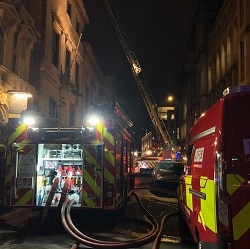
Fire: 114 Chancery Lane damaged in 2020
Individual solicitors and their firms will be paying an extra £13.2m to be regulated and represented in the coming year, the Legal Services Board (LSB) has confirmed.
The oversight regulator has approved the Law Society and Solicitors Regulation Authority (SRA) raising £127.9m from practising fees in 2023/24, an 11.5% increase on the current year.
This covers the SRA (£67.6m, up 12% from £60.5m) and the Law Society (£35.1m, up 7% from £32.8m), with the rest being costs levied on the profession by the LSB, the Legal Ombudsman, the Solicitors Disciplinary Tribunal and the Office for Professional Body Anti-Money Laundering Supervision.
The individual practising certificate fee is increasing 7% from £286 to £307, of which £162 will go to the SRA. This will pay for 40% of the funding requirement, with the rest covered by firm fees.
As we reported in May, the SRA’s overall budget is going up £10m to nearly £98m, with the income not covered by practising fees coming from other sources, such as Solicitors Qualifying Exam fees.
Its staff costs are to increase by over £5m. The SRA told the LSB that negotiations with the recognised union on pay increases were “ongoing”, while more staff for the investigation and enforcement function – hired in a bid to reduce delays – had added £1.3m to staff costs this year.
More staff in other areas, including anti-money laundering and corporate complaints, would take the headcount from 733 to 770.
Though practising fees largely pay for regulation, the Legal Services Act 2007 allows the Law Society in its representative guise also to access them for ‘permitted purposes’ – certain prescribed non-regulatory activities, such as law reform.
Not all of the Law Society’s work is covered by this, so it too raises money from commercial activities. As a result, its total budget for 2023/24 will be £46.3m.
The application for approval said the Law Society’s seven-year project to upgrade its IT and refurbish its headquarters – at a cost of £42m – would conclude this year.
The society also revealed that longstanding plans to let out the adjoining building it owns at 114 Chancery Lane – which was damaged by a fire in 2020 – are finally progressing.
“During 2022-23, a working property group (appointed by our council) recommended reinstatement of 114, with up-to-date enhancements for accessibility and health and safety. Once this work is completed, we aim to let the building.”
The LSB said the application provided confidence that the Law Society and the SRA “have carefully and properly planned their financial position for the forthcoming year. We are satisfied that the application provides transparency to the regulated community about the reserves and financial resilience of [both]”.
The SRA currently has reserves of £18.4m and the Law Society £58.4m.