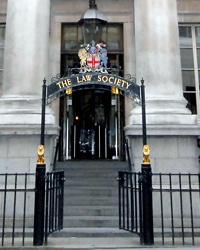
Law Society: SRA approach causing grave concern in the City
The Law Society yesterday rowed back from its support for would-be solicitors being able to qualify without degrees, putting it at odds with government backing for apprenticeships.
Its chief executive, Catherine Dixon, said the move risked damaging the profession’s standing and even the global status of England and Wales as a jurisdiction.
As recently as September 2015 the society said any route to entry to the profession should encompass a level 6 qualification, as set out by the National Qualifications Framework, as a minimum standard, noting that the current routes to entry all meet this requirement, whether through the Chartered Institute of Legal Executives, apprenticeships or the qualifying law degree.
In her article on future regulation of the solicitors’ profession yesterday, Ms Dixon made the case for the Law Society wresting back control of professional standards, including those of entry, from the Solicitors Regulation Authority (SRA).
On entry, she wrote: “The SRA’s consultation on entry may result in solicitors not even needing a degree to qualify, which has the potential to damage both the profession’s reputation, and the envied global status of England and Wales as a centre of legal excellence and jurisdiction of choice.
“The society believes regulatory change which devalues the solicitor qualification will not deal with the fact that solicitors are still competing against unregulated providers and address unmet legal need.
“It also goes against the direction of travel in other professions, including teaching and nursing, which require a degree, and is causing grave concern to larger commercial and City firms in particular.
Back in 2013, when the government first backed an apprenticeship route to the legal profession, the Law Society said it was fully supportive.
Then president Lucy Scott-Moncrieff said: “Alternative routes of entry into the legal profession are essential in order to enable new entrants to gain qualification through a modularised and work-based learning approach, since the costs of education and training through graduate routes continue to rise.
“Equality, diversity and social mobility are fundamental factors for the future of the profession. There are many eminent, senior and successful solicitors currently in practice who did not go to university, and this informs our own thinking currently about the various ways in which it should be possible to qualify as a solicitor.’
“This shows that alternative routes to qualification need not, and must not, undermine the overarching priority that required standards must be consistent across all routes to qualification.”