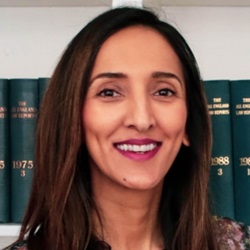
Mahey: High empathy skills
Law firms should respond to the needs of neurodivergent lawyers without requiring them to produce formal diagnoses, a senior neurodiverse solicitor has said.
Ravi Kaur Mahey said law firms needed neurodiversity policies and training, platforms where staff could share their needs, and onboarding systems which allowed them to “out themselves” as neurodiverse.
Ms Mahey, a director in the childcare and family department of national firm Cartwright King, said that when her Attention Deficit Hyperactivity Disorder (ADHD) was diagnosed five years ago, there was “no understanding” of what it meant. “They thought it was an issue that only affected young boys.”
Since then, law firm HR departments had become more understanding and introduced external training for staff and managers.
However, the “biggest barrier” preventing neurodivergent lawyers from getting the adjustments they needed to the way they worked was obtaining a formal diagnosis.
“Law firms identify needs with labels. I advocate that we shouldn’t need formal diagnoses.”
Ms Mahey said there was often a “huge waiting list” for diagnoses and neurodivergent lawyers “may not understand” what their condition was.
“It’s all about firms creating structures where their people share their needs and have a platform where they can share their neurodiversity. That is the best way to educate.”
Ms Mahey said her own approach was to work “really intensely” for a couple months, “burn out” and then recover for a week.
As an associate, this led to “frequent mental health breakdowns”. It was only when she became a manager at Duncan Lewis in 2014 and she had more control over how she worked that she could take the time off.
“I had a CEO who was very interested in letting people work how they wanted, as long as it delivered results.”
Ms Mahey said that, as a manager, her ADHD was an asset in that it gave her “high empathy skills”, helping her to “recognise needs without needing labels”.
At one point, she had six or seven neurodiverse lawyers directly reporting to her, “part of a new generation where ADHD or dyslexia is picked up by the education system”.
This “forced me as a manager to really understand what their lived experience was”.
Ms Mahey went on: “For years I couldn’t understand why my ADHD medication wasn’t working. Through conversations with my psychiatrist, I realised I had an autistic presentation, which makes my presentation very complex.
“It’s not typical ADHD or autism, but an overlap of the two. It’s taken me years to unlayer and unmask who I am as a person.”
On the positive side, she said that her neurodiversity “forms part of my skillset”.
She was “very open about her presentation” and did “a lot of public speaking” about neurodiversity.
“I was worried that being open would be career suicide, but thankfully that did not happen.”
Ms Mahey, who is a member of Neurodiversity in Law, added: “The main challenge for us is being understood by our peers. I’ve never had difficulties with clients understanding. I think clients understand me very well.”