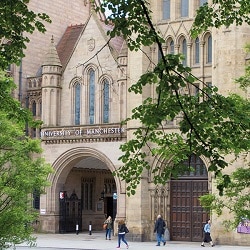
Manchester University: Consortium with law firms
A collaboration between a leading university and two major law firms has been unveiled with the aim of looking at the impact of technology innovation in the legal sector.
The University of Manchester will bring together an interdisciplinary academic team from its schools of law, business and computer science, to form a consortium with City giant Freshfields Brukhaus Deringer and DWF Ventures, the national law firm’s research and development arm.
The consortium is the first research collaboration of its type in the UK to draw on business and academic expertise to develop research and teaching focused on the potential application and the impact of digital technology in legal services provision.
Following its launch, the consortium will be open to additional members from the legal, technology and associated sectors.
The new initiative aims to:
- Innovate in the use of technological applications into legal services firms and produce future graduates with the skills to utilise the technology and platforms within the sector;
- Fund and direct research activities covering fundamental research relating to the application of technology to aid understanding the emerging technology trends that may affect the sector and examine their potential impact on the provision of legal services; and
- Contribute to public policy debate on innovation in legal technologies.
Professor Andrew James, one of the academics leading the new initiative, said: “It is intended that this consortium becomes a platform for innovation and a voice of recognised expertise in this emerging field.
“The university has a strong reputation of collaborative research with industry partners, with more UK businesses working with us than any other UK higher education institution; by combining our research expertise with business awareness, we hope this work will result in the establishment of improved service provision within the legal sector.”
Meanwhile, City firm Kennedys has opened a new business, Kennedys Kognitive Computing, and appointed a nine-strong development team, in India.
The move develops what was initially an exclusive partnership with Cognitive Computing Services, based in Kerala, which started in 2017.
The new business will be focused on technologies such as rapid prototyping, application development, text analytics, machine learning and blockchain.
Richard West, head of innovation at Kennedys, said: “They will join our wider development team and will be focused on prototyping new products to begin with. This also gives us the ability to augment our existing development function quickly and effectively.”
In a separate development, leading South West law firm has joined forces with an IT support provider to create a joint venture offering cyber security and data protection services.
Stephens Scown has joined forces Bluegrass Group to create nuBright, which will offer legal and technical solutions.
Robert Camp, Stephens Scown’s managing partner, said: “Compliance, data protection, risk and IT are top of any board’s agenda.
“With such a fast-moving IT and regulatory landscape, it is crucial that businesses advance their technology and systems to deliver increased business security and improved efficiency.
“Combining Stephen Scown’s legal expertise with the technical prowess of Bluegrass, nuBright will deliver a range of services to help businesses meet the challenge and provide peace of mind.”
David Thomas, Bluegrass’ managing director, added: “It’s not practical nor strategically advantageous for businesses to treat technology and law in isolation when it comes to data protection and cyber security.
The initial services being offered by nuBright include online GDPR training, data breach response and cyber threat protection. The video-based GDPR training costs only £7 per person.