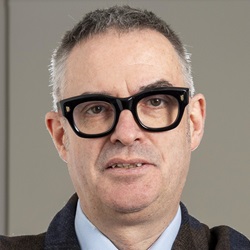
Inkster: Global offering
A law firm has launched a specialist service this week to help lawyers tackle the “legal consequences of mistranslation”, including errors made by AI.
Brian Inkster, chief executive of Scottish firm Inksters, said the problem was “not just about AI” but about all kinds of “poor translation that ends up in court”.
Translation Law was “not a translation service”, but a service that “looks at where the translation should have been and helps deal with the situation at the outset”.
He went on: “Lawyers are increasingly working with documents translated by AI, but the fact that something reads well doesn’t mean it is legally accurate.
“A single word can change what someone is required to do, what they are entitled to receive or whether they have a case at all. If that mistake is relied upon, the consequences can be serious.
“We’re creating a service that allows lawyers to look beyond whether a translation sounds right and examine what it actually means for their client’s legal position.
“AI has made translation much more accessible, but it hasn’t removed the need for human expertise or the responsibility to check what those documents actually say.”
Translation Law, offered through Inksters, will be run by legal translation specialists John O’Shea and Deborah do Carmo, following their research into the legal consequences of translation.
Mr Inkster said they will operate, like the lawyers at the fee-share firm, as self-employed consultants.
The service will be marketed to lawyers and law firms “anywhere in the world”, helped by Inksters’ membership of the International Practice Group.
Mr O’Shea said: “AI can translate thousands of pages at the press of a button, but somebody still has to establish whether the translation is correct.
“Automated translations can appear fluent and convincing while containing mistakes that change someone’s legal obligations or affect the outcome of proceedings.
“The consequences aren’t simply linguistic. They can affect someone’s business, their finances or the rights they are trying to protect. That’s why we’re examining what lawyers can do when translation errors occur.”
Mr O’Shea and Ms do Carmo have expertise in translating Greek, Dutch, Portuguese and Afrikaans into English, and can rely on an international network of legal linguists covering languages such as French, German, Spanish and Polish.
Ms do Carmo commented: “Translation has traditionally been treated as something that happens in the background of a legal case. Yet it is often the point at which the meaning of a document changes as it moves between languages and legal systems.
“Lawyers may be relying on a translated version without realising that an important distinction has been lost or that a particular term means something different under another country’s law.
“We want to bring those questions into the legal process much earlier, when there is still an opportunity to prevent a problem. Where something has already gone wrong, we want to help lawyers understand what remedies may be available.”
Research has identified “hundreds of court cases internationally involving translation disputes, including cases resulting in property-related fines and invalidated patents”.
Translation Law will primarily support other law firms handling international commercial contracts, litigation and cross-border matters, as well as cases involving people who do not speak the language in which legal documents have been prepared.