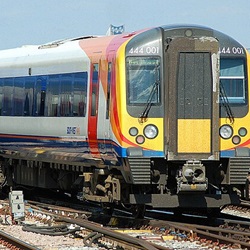
Stagecoach South West Trains: Low take-up of damages
The law firm acting for the claimants in the boundary fares collective action has called for a donation of £5-6m to be made from unclaimed damages to the Access to Justice Foundation.
The Competition Appeal Tribunal (CAT) has given permission for the firm, Charles Lyndon, and the claimant’s litigation funder Woodsford, as well as the after-the-event (ATE) insurers, to intervene in the application dealing with how to distribute the unclaimed damages.
Justin Gutmann, the class representative (CR), alleges that various train companies unlawfully abused a dominant position by failing to make so-called boundary fares sufficiently available to consumers holding valid travelcards, meaning they were charged twice for part of the same journey.
In May 2024, the CAT approved the settlement of the claim against Stagecoach South West Trains (SSWT) for up to £25m, with an estimated 1.4m rail passengers potentially eligible for a share. He had originally valued it at £39m.
The settlement, only the second under the CAT opt-out class action regime, was unusual in providing for “ringfenced costs” of £4.75m to be paid to the claimants before the £25m was distributed. The CAT said the “reasonable costs” of the case were probably well in excess of £10m.
Further, if less than £10.2m of the £25m was claimed by passengers, the CR would be able to take the balance up to that figure in further non-ringfenced costs, fees and disbursements, subject to the indemnity principle.
In fact, only £216,500 has been claimed by class members, leaving almost £10m available as non-ringfenced costs.
The settlement agreement provided for the CR to apply to the CAT to deal with this money.
Delivering judgment on the intervention applications, the CAT said that, given the “very low take-up” of damages, it would consider a “substantial payment to charity alongside any claims and representations by stakeholders, to be paid out of any costs, fees and disbursements”.
Rodger Burnett, director and co-founder of Charles Lyndon, said on LinkedIn: “We have always been of the view that, in light of the disappointing take-up, a significant portion of the undistributed damages should be donated to a suitable charity. A view shared by Justin Gutmann and counsel in the matter.
“Whilst any such decision must be taken collectively and in consultation with the relevant stakeholders (which we will do following this ruling), Charles Lyndon would support a payment of £5m to £6m to [the Access to Justice Foundation] from the undistributed damages.
“This would not only help address some of the difficulties of distribution but would also ensure that the settlement delivers broader public value.”
In its application to intervene and participate at the stakeholder entitlement hearing listed for September, Charles Lyndon argued that its work was “instrumental in achieving the settlement for the benefit of the CR”.
The law firm said the settlement was the product of “several years of diligent effort” and “no other party before the tribunal” could adequately represent its interest in ensuring that its fees were paid.
In its application, Woodsford argued that it was clear, under the terms of the settlement agreement, that any payment it and the ATE insurers would receive from any non-ringfenced costs “will be less than the amount of their prima facie contractual entitlement under the funding arrangements”.
Despite the case “having resulted in a successful settlement for the class members”, Woodsford, the insurers and other stakeholders “may ultimately be paid less than the sums they might reasonably have expected”.
It went on: “In those circumstances, and bearing in mind the essentially non-recourse nature of funding arrangements in opt-out collective actions, Woodfords and the ATE insurers’ financial interest in the allocation of such sums as are available for payment to stakeholders is particularly acute.”
The CAT said that in deciding how the balance of non-ringfenced costs was dealt with, it would need to consider “a multiplicity of factors”, including success.
“These proceedings have been a limited success in that whilst the proceedings were settled on the basis of substantial sums being made available by the defendants in a standalone action where the tribunal considered that the outcome of any trial was far from certain, the very low take-up by class members very much colours that and makes the success qualified and potentially disappointing.”
The CAT said it hoped that the tribunal, parties and stakeholders would work together at the entitlement hearing to reach an outcome that was “fair to all concerned”, reaching “a result that the current proceedings do not end up predominantly for the benefit of stakeholders, with only a small proportion going to class members and charity”.
The CAT unanimously allowed the applications to intervene and said the Access to Justice Foundation would be allowed to submit “any observations or representations it may wish to be considered”.
We reported last month that the funder in the landmark Merricks v Mastercard CAT settlement is challenging the foundation’s potential £30m “windfall” from the case.