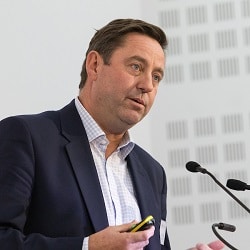
Beech: Strengthening the platform
Listed law firm Knights yesterday reported a “return to organic growth” in its last financial year as part of a 28% bump in revenues to almost £208m, while profit before tax was up 19% to £33m.
Of the £45.7m in extra income in the year to 30 April, £18.6m came from acquisitions completed during the year and £16.5m reflected the full-year impact of those from the previous 12 months.
The remaining £10.6m increase was organic growth, which accelerated during the year and was 7.1% overall.
The consolidator completed two major acquisitions in the 12 months to 30 April 2025 – Thursfields and IBB Law – and announced three more in the following year: a £16.6m deal for Essex law firm Birkett Long, followed by 33-lawyer Sussex firm Rix & Kay and then small Cardiff firm Le Gros Solicitors to mark its entry into Wales. This was Knights’ 26th acquisition since listing.
In March, Knights confirmed it was in talks to buy South-East firm Moore Barlow, which would be its largest deal to date.
Yesterday’s results showed the firm increased underlying earnings before interest, tax, depreciation and amortisation (EBITDA) by 20% to £52m, but the EBITDA margin dropped by 1.7 percentage points due to higher National Insurance contributions, less client interest income and investment in technology.
The firm’s 30 debtor days and 84 lock-up days were slightly lower than the previous year.
Net debt was also maintained at a similar level, £65m, despite around £17m of acquisition-related payments.
Chief executive David Beech noted that Knights’ turnover has doubled in five years while also investing in strengthening the platform: “Our unified technology approach, centralised business services support, and expanded, experienced management team will facilitate operational gearing as we grow.
“At the same time, our continued cash discipline has seen us deliver reduced work in progress and debtor days, enabling us to grow and invest without a material increase in debt.”
He said a “key driver” of the law firm’s return to organic growth had been “the quality of our people, as we have hired more selectively and retained experienced professionals with high-quality client followings and networks”.
Mr Beech went on: “This year, we recruited 39 new senior recruits and maintained low annual churn at 10%. Our increased focus on helping new colleagues to onboard clients to drive profitable growth has supported an increase in fees per fee earner and new joiners reaching ‘run-rate’ revenue sooner.”
Knights maintained “a focus on pricing, ensuring it reflects the value of our services and market positioning through regular reviews of our rates and training our professionals”.
Meanwhile the firm had expanded its capabilities and footprint organically by “adding to our range of service lines and specialisms in areas such as tax, ESG [environmental, social and governance], competition, regulatory, sport and agriculture, and by entering Cardiff, which was a move facilitated by the strength of our brand reputation and presence in adjacent regions”.
The firm declared a final dividend of 3.69p, giving a 17% increase in total dividend for the financial year to 5.63p.
Our annual review of the performance of listed legal businesses recorded that Knights did the best in 2025, with its share price jumping by 70% to 179p. Shares in Knights were up 4.5% to 195.6p at the close of trading yesterday.