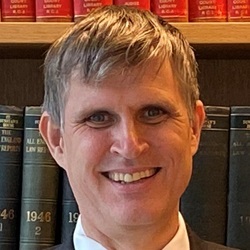
Richards: Paralegal assumed she could do the work she was given
The High Court has expressed surprise that a paralegal did not know more about the restrictions that the reserved legal activities imposed on her work.
It would appear from the ruling on a high-value will dispute that Mr Justice Richards raised the issue in assessing how much he weight he could place on her evidence.
Though the hearing in the challenge took place before the Mazur ruling, which has raised the profile of the reserved activities more broadly, the decision was handed down yesterday, six weeks after it.
At the same time, the only reserved activity in private client work is the grant of probate, so it’s not clear what the judge was referring to – and the Legal Services Act 2007 states that a non-authorised person can do it under supervision from an authorised person, like a solicitor.
The case [1] concerned a challenge by a son of the late Richard Scott, who made millions running car boot sales, to two wills he signed.
They were drafted by Kate Sutherland, then a paralegal at Stoke law firm Beswicks.
In assessing her as a “transparently honest and reliable witness doing her best to assist the court”, Richards J noted: “It was, perhaps, slightly surprising that Mrs Sutherland did not know more about the regulatory environment applicable to non-solicitors and the restrictions on conducting reserved legal activities.
“However, this is not a case that concerns the regulation of legal professionals and her relative lack of knowledge on this topic has not caused me to doubt her evidence.”
Later in the ruling, the judge explained: “Mrs Sutherland had a law degree, but was neither a qualified solicitor nor a legal executive. She had passed two examinations set by the Society of Trust and Estate Practitioners (STEP) in the administration of estates and probate. She knew about the Banks v Goodfellow test for testamentary capacity.
“During cross-examination, it became clear that Mrs Sutherland was not fully on top of the restrictions that applied to persons, such as her, who were not qualified lawyers carrying out reserved legal activities.
“I conclude that, while she was at Beswicks, she did not consider whether she was permitted to perform the activities that Beswicks asked her to, but instead undertook those activities, assuming that she was permitted to do so.”
By the time she drafted the first will for Mr Scott, the judge observed, the paralegal had built up “substantial practical experience in the drafting of wills and surrounding issues, including questions of testamentary capacity”.
She drafted five wills in total, the last two of which were disputed. But the court rejected the challenge to them
When it came to assessing Mr Scott’s testamentary capacity, Richards J ascribed weight to Mrs Sutherland’s conclusions – though not as much as he would have done had she been a solicitor, he said. Mrs Sutherland “knew what she was looking for”, he said.
The ruling also recorded that in 2013 Mr Scott’s son had taken an earlier will to North-West law firm Napthens to seek advice on whether his father was entitled to resile from promises that the son believed he had made during his lifetime.
“Napthens advised that Adam could not bring a proprietary estoppel claim during Richard’s lifetime. It was common ground before me that this advice was incorrect and that the fact that Richard was still alive did not preclude a claim.”