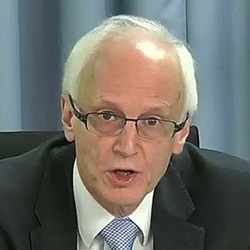
Langstaff: Lawyers are part of the solution
The head of the infected blood inquiry yesterday called on the Solicitors Regulation Authority (SRA) to tell solicitors that they should not be charging clients making a claim for compensation.
Sir Brian Langstaff also said the Infected Blood Compensation Authority (IBCA) had belatedly realised that “lawyers are part of the solution, rather than part of a problem”.
The inquiry reported in May 2024 but issued an additional report yesterday containing a wide-ranging critique of how the IBCA was working and saying victims were being “harmed further” by it.
It is thought 30,000 people were infected with HIV and hepatitis in the 1970s and 1980s after being given contaminated blood products on the NHS, of whom more than 3,000 have died. The government has set aside nearly £12bn for compensation.
Since the IBCA was set up in May 2024, 2,043 people have been asked to start their claim and 1,674 have done so. So far, 616 people have received offers and 460 been paid compensation totalling £326m.
Given both the complexity of the underlying regulations and “fundamental importance” of ensuring people receive the compensation which the regulations entitled them to, “it is obvious that legal support must be available (free of charge) to those individuals who want that support”, said Sir Brian, a former High Court judge.
But there was evidence “which suggests that IBCA may not have welcomed the involvement of lawyers”, meaning it “missed an opportunity” to draw on their experience when setting up the scheme.
“A recognition that lawyers are part of the solution, rather than part of a problem, has been belated.”
Sir Brian suggested that some of this apparent reluctance stemmed from past experience in relation to miners’ compensation – when some law firms took slices of clients’ damages while also being paid by the scheme.
“Memories of what happened 20 years ago to the miners’ community appeared still to be raw when [minister] Nick Thomas-Symonds spoke of the scandal in his evidence on 7 May.
“I should be absolutely clear, however, that what happened then does not justify any reluctance there may have been to involve lawyers on behalf of their clients in this compensation scheme.” This did appear to have abated of late, he noted.
This was particularly as the IBCA has now agreed to pay for claimants’ legal advice from five law firms: Collins Solicitors, Leigh Day, Milners Solicitors, Thompsons Solicitors Scotland, and Watkins & Gunn.
These firms “can be trusted not to put themselves in a position where their own financial interests conflict with their client’s best interests by seeking any further payments from those clients”, Sir Brian said.
However, a simple Google search showed that other solicitors were offering to help claimants on a ‘no win, no fee’ basis.
Sir Brian said the SRA had told him it was prepared to write to remind solicitors of their obligations, and he made a recommendation to that effect.
He also recommended that the IBCA include “a prominent reference” in its communications to the availability of the legal support it paid for.
“It can be made clear on websites by campaign groups and charities that any person entitled to claim should expect that they will not be asked by any solicitors’ firm for any payment.
“If a firm proposed to seek any payment – conditional or contingent ones included – from an applicant, they would be bound as a matter of professional ethics to ensure that their client knew that they could obtain a similar service from other solicitors without having any such payment to make.”
Among the report’s recommendations – which included allowing individuals to apply without waiting to be asked by the IBCA – was to make “better use of lawyers”.
“The system would undoubtedly speed up overall if more claims were prepared by legal representatives familiar with the details of the compensation scheme and presented by them to IBCA for review, or further discussion.”
Sir Brian also observed that it was “unfortunate (to say the least)” that during the process of agreeing the deals with the five firms, the IBCA proposed a clause which “would have restricted the lawyers’ ability to air criticisms in public”.