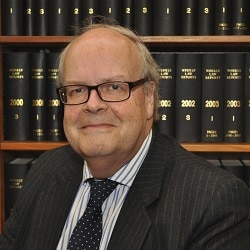
Simon: Initial undertakings restored
The in-house solicitor for a property development company had his office bugged, and conversations with his external lawyer at Pinsent Masons covertly recorded, it has emerged.
The man who ordered the recordings, John Thomas Kelly, initially disclaimed all knowledge of the surveillance before confessing that he was responsible.
The highly unusual events were revealed yesterday in a Court of Appeal ruling as part of litigation over whether the recordings could still be used.
According to Lord Justice Simon, Mr Kelly was one of four family members who in 2017 sold their interest in various businesses to DSM SFG Group Holdings and its St Francis Group subsidiaries for £23m.
“Subsequently, he became concerned that there was something wrong with what had occurred. In late 2018, he entered the claimants’ premises and placed recording devices in the office of Adrian Kennedy, [DSM’s] in-house solicitor.”
For two months, Mr Kelly recorded approximately 40 hours of conversations, “all of which were confidential and many of which were privileged and confidential”, involving conversations with Stuart McNeill of Pinsent Masons, who acts for the claimant companies.
The recording device was discovered and the claimants issued an application for injunctive relief under the Protection from Harassment Act 1997 and for breaches of confidence.
A claim form was also issued, alleging that Mr Kelly sought to use the recordings to put illegitimate pressure on the companies and their employees.
In February this year, the High Court gave directions for a speedy trial to consider whether the information was confidential and/or privileged, and Mr Kelly gave undertakings not to make any use of the recordings except for the purpose of defending the claim.
Facing an application soon after for an order to identify the whistleblower he said had provided him with details of a particular piece of confidential information, Mr Kelly then admitted that this person did not exist.
He said: “The correct position is that I instructed and was assisted (by allowing the individual access to the premises) a retired police officer… to place a recording device in the [claimants’] offices, in particular the office of Mr Kennedy.”
At a hearing in May, Anthony Metzer QC, sitting as a deputy High Court judge, acceded to Mr Kelly’s request to revise his undertakings so that he could also use the recordings to bring “any counterclaim and/or related action” against the companies and others associated with them.
The Court of Appeal allowed the claimants’ appeal against this and ordered that the initial undertakings be restored.
The issue of the confidentiality should be resolved before the recordings were deployed, and not at the same time or afterwards, Simon LJ said.
“The effect of the judge’s order was the reverse: [Mr Kelly] was enabled to deploy the confidential information before he had established the right to do so.”
Lord Justice Davis agreed, saying the judge’s ruling was not just.