


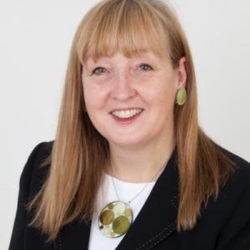
Mulcahy: Legal aid firms need to benefit from ILCA
Interest on Lawyers’ Client Account (ILCA) schemes “work really efficiently” in 77 jurisdictions around the world, an academic researching funding for the free legal advice sector has told MPs.
However, Professor Linda Mulcahy said that she could not see “anyone in the not-for-profit or the legal services sector” supporting the scheme currently proposed by the Ministry of Justice (MoJ) because there were “no beneficiaries”.
Giving evidence to the justice select committee as part of its access to justice inquiry, Professor Mulcahy, based at Oxford University’s Centre for Socio-Legal Studies, said there was “tremendous potential” for ILCA schemes to provide “really critical resources for a free legal sector that I think everyone acknowledges is in crisis”.
She is leading a project launched last April exploring new funding streams for the not-for-profit legal advice sector. It is run in partnership with the Access to Justice Foundation and Surrey University, and funded by the Nuffield Foundation.
It also made a written submission to the inquiry, which we reported last month.
Professor Mulcahy explained that ILCA schemes had spread from Australia to Canada and the USA, but they had their origin in a ruling on a Scottish case by the judicial committee of the House of Lords, so it was “ironic” that the UK was “one of the last Commonwealth jurisdictions to think of taking up the scheme”, she said.
Around the world, about 75% of the money generated by ILCA schemes went to free legal advice and the rest to other projects, many of which were “still to do with access to justice”.
In 2023, “a good year for interest rates”, Canadian ILCA schemes in Ontario and British Columbia earned £260m and £125m respectively, while the New South Wales scheme in Australia raised £83m.
But Professor Mulcahy said a lot of the statements in the scheme proposed by the MoJ last month “aren’t actually evidence-based and my opinion is that there is a lot more work to be done in the detail of the scheme”.
She focused in particular on the MoJ’s plan that money raised be added to its general coffers rather than targeted specifically at access to justice causes.
“I can’t see anyone supporting this scheme in the not-for-profit or the legal services sector. There are no beneficiaries. It’s really obvious that the beneficiaries need to be legal aid firms, which at the moment are using this interest to cross-subsidise more legal aid work.
“We desperately need the money to go to law centres and free legal advice services that are in crisis.
“The fact that there are no named beneficiaries means that we will all worry that the civil justice system is once again cross-subsidising prisons and the criminal justice system, which has happened repeatedly over a 30- or 40-year period.
“The Ministry of Justice is also suggesting they administer the scheme. That is a very unusual way of going about it. The funds are normally given to a separate foundation that is separate from government.”
One of the problems with such a model – and “we’re seeing that in the US at the moment” – was “the danger that the government will grab that money [meant] to support the legal advice sector, take it away and use it for another purpose”.
Professor Mulcahy said her project was researching other funding options, such as levies on commercial law firms, which had been considered by previous governments but had been “put on the back burner and was not being looked at for the moment”.
It had also studied the redirection of dormant funds which could not be traced and legal expenses insurance.
However, the “most important” alternative funding scheme at the moment was residual funds in consumer collective actions, but the problem with that money was that it was “volatile”.
Professor Mulcahy said ILCA schemes could make “a significant contribution” to funding the free legal sector, which was “looking for any opportunities” for a “significant influx” of funds.
She added that the project was in touch with the MoJ, and a conference would be held next month with MoJ officials and experts on ILCA schemes from the USA.











