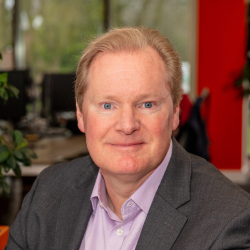
Graham: obsessed with customer service
Gloucestershire high street firm Langley Wellington yesterday became the latest alternative business structure (ABS), with the Solicitors Regulation Authority (SRA) promising more in the coming weeks.
Meanwhile, Berlad Graham has become the latest ‘virtual’ law firm to apply to become an ABS as it bids to allow non-lawyers to share the equity.
Langley Wellington has six partners, plus a corporate partner through which former managing partner Philip Day provides commercial property services. Based in Gloucester, it recently opened an office in Cheltenham.
Non-lawyer partner Andy Moston said that as a legal disciplinary practice the firm would have had to convert to ABS status anyway, and that the firm did not want to wait because “we never want to follow – we always like to lead”. Being only the 15th ABS licensed by the SRA put Langley Wellington at the forefront of the profession, he said.
While at present there are no plans to exploit ABS status, Mr Moston said that having it “opens doors to us which weren’t previously there”.
Berlad Graham – which has a ‘hub’ in Uxbridge, west of London but day to day operates in the cloud – is the brainchild of solicitor Raanan Berlad and non-lawyer Stewart Graham, who previously worked together at Maidstone firm Heath Buckeridge. It currently provides litigation, property, private client and matrimonial services.
The firm has submitted its ABS application so as to allow Mr Graham to hold an equity stake in the firm, but he said it would also allow them to bring on board “potentially lots of other [non-lawyers] who can contribute”. They are not currently looking at external investment.
Berlad Graham is the latest so-called virtual or dispersed practice to seek ABS status, following the likes of Everyman Legal and Halebury.
At present Berlad Graham has three consultant solicitors, who are self-employed, for whom it covers all their costs, including practising certificate fees; it only insists that they are specialists in their chosen field.
Mr Graham said he has “a total obsession with customer service – if you provide good customer service, you’ll never have to look for work”. Since they set up last October, they have attracted over 100 new clients.
In common with many ABS applicants – both successful and still in the system – he described the ABS application process as “very tortuous”.
SRA chief executive Antony Townsend said: “We expect to authorise a number of ABSs over the coming weeks. We are working with prospective firms to help them with their applications.
“Our authorisation system has been built to be flexible enough to deal with a range of organisations with hugely varying corporate structures and robust enough to apply the same stringent suitability criteria by which traditional firms are judged. We make no apology for ensuring that the systems we have in place are thorough, but will continue to make improvements to the process as we gain further experience.”