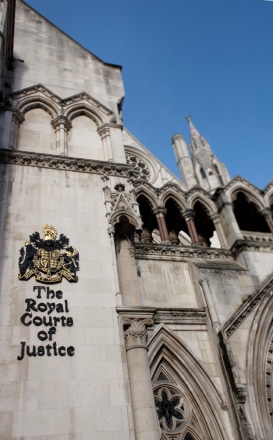
High Court: SRA asked to investigate urgently
The incoming Lord Chief Justice has asked the Solicitors Regulation Authority (SRA) to consider a law firm’s continuing fitness to practise having found its senior partner in contempt of court.
The highly unusual request by Sir John Thomas, president of the Queen’s Bench Division ahead of his elevation to Lord Chief Justice, and Mr Justice Cranston followed a hearing on Monday that related to emergency, out-of-hours applications to High Court judges for injunctions to stop deportations.
At the hearing, the court sought explanations from Benny Thomas, described as principal solicitor and senior partner of east London-based Consilium Chambers, over the firm’s “failure to comply with the Civil Procedure Rules in the submission on the claim; and/or their reasons for lodging claims that amount to a clear abuse of process; and/or their reasons for misstating their client’s position on papers and to decide whether [he] should be committed for his contempt of court”.
Having taken evidence from Mr Thomas and a caseworker at the firm, the court decided that Mr Thomas was guilty of contempt but determined not to take further action in light of the decision to refer him to the SRA.
It invited the SRA to conduct an “urgent investigation into the firm” and to consider in particular “the firm’s continuing fitness to practise [and] the court’s findings from today’s hearing in relation to the untruthfulness of evidence given by Mr B Thomas to this court and decide what action to take”.
The Judicial Office said that while a transcript of the case is not yet available, the court was “keen for this information to be disseminated”.
According to the Law Society’s ‘Find a solicitor’ website, Consilium Chambers has two partners, with two further solicitors listed as consultants.