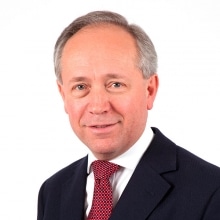
Snyder: firms need to think laterally
The first firm of accountants to become an alternative business structure (ABS) licensed by its own regulator is planning to extend the range of legal services it offers, its senior partner has revealed.
But Sir Michael Snyder said solicitors should seek out the opportunities offered by multi-disciplinary practices (MDPs) rather than complain about losing work to them.
Kingston Smith, a top-20 accountancy practice, was licensed as an ABS by the Institute of Chartered Accountants in England and Wales earlier this month to conduct reserved probate work.
Sir Michael said this was an end in itself – “it means we can offer the total package of services” – but also a precursor to becoming a proper MDP and offering a wider range of legal services that are “effectively ancillary to our main business… making it easier for SMEs to get the services they want”.
As an example, Kingston Smith employs two non-practising lawyers in its HR Insights business and Sir Michael said the firm wants them to be able to appear for clients before employment tribunals. The institute has plans to apply for the right to regulate other areas of reserved work, including litigation and advocacy.
He predicted that Kingston Smith would also look to offer legal services alongside lower-end mergers and acquisitions advice where the cost of having more than one firm of advisers on board can make the whole transaction harder to complete.
“But we won’t really be competing with the law firms we deal with because we won’t be doing large transactions,” he added.
Such is the commitment to being an MDP that although for the foreseeable future legal services will be a “smallish” part of the Kingston Smith whole, Sir Michael said in the long term (10 years or more) it was not impossible that legal services could become the dominant side of the business.
Sir Michael – who is co-chairman of the government’s Professional and Business Services Council – urged smaller law firms to embrace the opportunities offered by new business structures to work with accountants, surveyors and other professionals to offer clients a one-stop shop.
“They need to think laterally,” he said. “There’s a lot of fear out there, but there shouldn’t be.”