


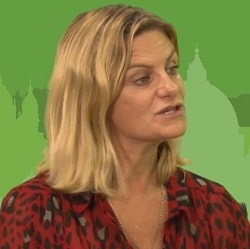
Perkins: Decisive moment
The government has proposed detailed conditions which would allow employers and workers to sign non-disclosure agreements (NDAs) relating to harassment or discrimination in strictly limited situations.
The Department of Business and Trade (DBT) said that even if a valid ‘excepted’ NDA was signed, the worker could speak about it to a wide range of people, including lawyers and close family members, but not friends.
Any NDA attempting to prevent disclosure of “relevant harassment or discrimination” would be void.
The government announced last July that it would ban NDAs covering harassment and discrimination unless the victim asked for one.
The misuse of NDAs is one of the issues commonly cited when concerns about lawyers’ ethics have been raised in recent times.
Launching its consultation on the detailed regulations to underpin the law, the DBT said the new regime would come into effect in 2027.
To qualify as an excepted NDA, the DBT proposed that a worker “should express their preference in writing to enter into an excepted agreement, following the receipt of independent advice”.
The agreement should include the name of the adviser, who should have indemnity insurance.
The employer would not have to pay for the advice. The DBT acknowledged that it was common practice for employers to contribute to the cost of taking advice to ensure that a settlement agreement was legally valid and said it expected this approach would be taken by many employers in relation to excepted agreements as well.
“We also think there are practical difficulties in requiring employers to pay for advice, such as whether the worker should or should not be able to select the adviser and how costs to the employer would be contained.”
The DBT said preventing employers from suggesting confidentiality may have unintended consequences.
“For example, if an employer were to mention the use of an NDA in an initial conversation with the worker, this could be considered as the employer suggesting an NDA and therefore void the option of an excepted agreement even where the worker then decided it was their preference.”
The DBT proposed a mandatory 14-day cooling off period to allow the worker to withdraw from an excepted NDA after signing it.
A written copy of the excepted agreement should be provided to all parties, and potentially the agreement could be time-limited to “help prevent long-term secrecy; for example, reducing the chance that perpetrators remain hidden and are able to continue harmful behaviour”.
Having signed an excepted agreement, the DBT said workers should be able to make “permitted disclosures” to groups or individuals specified by the regulations, including “any person who has law enforcement functions”, a “qualified lawyer or a registered foreign lawyer”, any individual “entitled to practise a regulated profession”, and a regulatory body.
It could also include tax advisors, who “provide advice on any financial compensation received”, an individual or organisation who provides a service to support victims – for example a counsellor, ACAS and trade union representatives – prospective employers and close family members.
The ban on NDAs relating to harassment and discrimination could be extended to other categories of worker, such as agency workers, secondment workers and those on work experience placements or doing training, such as student nurses.
It could also be extended to the self-employed but this would be a “challenging task”.
In their foreword to the consultation, business secretary Peter Kyle and Kate Dearden, minister for employment rights and consumer protection, said: “While NDAs can have legitimate purposes, they should not be used to take unfair advantage of workers. Unfortunately, evidence has emerged in recent years that some employers have been doing just that.”
Zelda Perkins, co-founder of anti-NDA campaign group Can’t Buy My Silence, commented: “This consultation is a decisive moment in the fight to end the silencing of victims.
“The government has made a positive commitment to deliver but to make sure this legislation achieves its purpose, those who have suffered must speak up, loudly and clearly.”











