


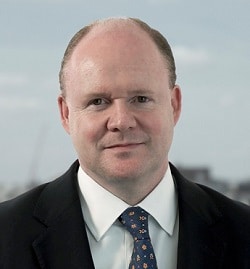
Biles: important milestone
The group that owns London law firm Gordon Dadds today became the second listed law firm after the shareholders of what was Work Group plc yesterday approved the reverse takeover first announced last month.
The new company was admitted to trading on AIM today, with Gordon Dadds chief executive Adrian Biles owning 26.7% of the shares in issue. It joins national law firm Gateley on the market.
As of the first closing date yesterday afternoon, some 98.8% of Gordon Dadds’ shareholders had accepted the offer.
The deal, which values Gordon Dadds at £18.8m acquisition, is accompanied by a placing that has raised £20m.
It describes itself as “an acquisitive London-based legal and professional services business with a twin-track consolidation model to integrate mid-market law firms under its Gordon Dadds brand, and to acquire smaller firms who continue to trade under their own name via its Prolegal acquisition vehicle”.
Mr Biles said: “Today represents an important milestone for the enlarged Gordon Dadds Group. The UK legal services sector is highly fragmented and Gordon Dadds’ proven consolidator model is uniquely positioned to take advantage of this significant market opportunity.
“We now have the necessary capital to support the group’s next stage of development which will enhance the group’s profile with clients and potential target firms.
“I would like to thank everyone at the Gordon Dadds Group who has worked so hard to help the business reach its current position, and I look forward with confidence to the group’s ongoing success.”
The firm has already outlined an ambitious acquisition strategy to double its £25m revenue over the next three years by becoming a “major consolidator” of both top 200 law firms and also smaller practices through a back-office platform that it has developed.
It said its model offered a number of advantages to target firms:
- Partners are not required to borrow to fund capital contributions and capital is built up over time out of profit share;
- Each partner receives as their profit share a percentage of his or her personal billings, allowing partners to achieve a significant uplift to what he or she might achieve in a traditional partnership practice;
- The Gordon Dadds model, with its clear division between management and back office on the one hand, and client acquisition and servicing on the other, allows partners to devote time to their respective practice areas; and
- Gordon Dadds Group plc’s corporate structure enables partners to acquire and retain an enduring investment in the business through equity ownership.
Gordon Dadds LLP targets firms with annual fee income of at least £10m for acquisition, while Prolegal Solicitors Ltd acquires and manages firms with £2m-10m annual fee income.
These latter firms retain their identity and culture and also benefit from the back-office technology platform used by Gordon Dadds and based in Cardiff, “which allows Prolegal to target law firms seeking an alternative solution to the regulatory and investment requirements of the UK legal market”.
It bought Prolegal Ltd last year, at the time a personal injury firm in administration, for £563,000.











