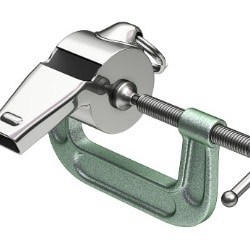
Whistleblowing: In-house solicitors can find themselves under pressure
In-house lawyers considering whistleblowing have been advised by the Law Society to “disclose specific information with factual content, not suspicions or unfounded allegations”.
The society, consulting on draft guidance developed with whistleblowing charity Protect, also said the where possible, solicitors should stick to what they have seen “first-hand”.
The society said whistleblowing should relate to certain categories of wrongdoing such as miscarriages of justice, damage to the environment or a criminal offence. In-house lawyers should also check that they reasonably believe making the disclosure is in the public interest.
“This usually means you are a witness to the wrongdoing rather than the issue centring on your own personal employment matters”.
Whistleblowing “does not shield” lawyers from disciplinary action, but they may be under a duty to report wrongdoing.
They should assess their risk of being victimised at work and consider whether they want to raise concerns “openly, confidentially or anonymously”. Lawyers should also consider the “personal ramifications (the potential impact on yourself and your family)”.
The society warned that whistleblowing protections are not available to solicitors who breach legal professional privilege (LLP).
The whistleblowing legislation has “a specific exception relating to information that is subject to LPP because of the importance of a client being able to consult a lawyer without fear of those communications being disclosed to a third party”.
If lawyers disclosed information that attracted LPP, their right to assert that the disclosure was a qualifying disclosure for the purpose of the whistleblowing protection was lost. The impact of this was “potentially quite wide-ranging”.
An in-house solicitor “may, for instance, have been copied into an email discussing the issues” raised in the disclosure.
“Even if the email does not ask you for advice, the employer could argue that the email was aimed at keeping you informed” so that their advice may be sought and given as required.
The whistleblowing guidance is part of an expanded ethical practice framework for in-house solicitors, which was first published earlier this year by the Law Society in partnership with the Inter-Disciplinary Ethics Applied Centre. It now includes a whistleblowing policy template.
Dr Jim Baxter, professional ethics consultancy team leader at the centre, said whistleblowers could find themselves facing unemployment, legal costs, or ostracism from colleagues who saw them as disloyal.
“In-house solicitors can feel stuck between a rock and a hard place: As well as all the difficulties any whistleblower faces, they may also risk breaching a professional duty of client confidentiality.
“Whistleblowing for in-house solicitors is never going to be easy or simple, but we hope these resources will go some way to support those who want to serve the public interest by standing up against wrongdoing.”
Sybille Raphael, joint chief executive at Protect, added: “This guidance is vital as in-house lawyers can face competing demands which are not easily reconciled.
“They face unique challenges in carrying out their duties to uphold the rule of law and report wrongdoing they are aware of, while also providing confidential, privileged legal advice to their client.”