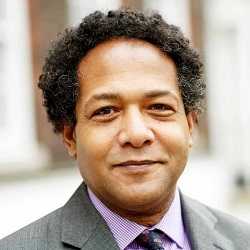
Alexander: No hearing so far has focused on the merits
The High Court has told parties to an intellectual property claim to find other ways to resolve their dispute in the light of the first three hearings all concerning costs and not the merits.
Mr Daniel Alexander QC, sitting as a deputy High Court judge, said a non-litigated approach should be treated “as the primary not the ‘alternative’ means”.
In Ociusnet UK Ltd & Anor v Altus Digital Media Ltd & Anor [2021] EWHC 3377 (Ch), the claimants brought a claim for passing off and an application for an interim injunction.
In June last year, the defendants agreed to the terms of injunction with the exception of costs and, at the hearing the following day, Mr Alexander summarily assessed costs at £60,000.
Soon after, the claimants pointed out that they did not seek judgment on the claim and instead they planned to amend it to incorporate further relief.
In the present application, with the £60,000 unpaid, the claimants sought a non-party costs order. Mr Alexander, “with some hesitation”, refused the application at this stage and adjourned it until trial, and then added some comments at the end.
This started with him quoting Lord Justice Coulson from a ruling last year in which he said: “For those who believe that most civil litigation does not end up being about the costs that were incurred in pursuing that same litigation in the first place, look away now.”
Mr Alexander said: “That was said at the conclusion of litigation. The present case has hardly reached first base. Despite that, it has involved three hearings requiring multiple days of preparation by the parties and significant court time, including consideration of a hearing bundle running to nearly 700 pages not including authorities.
“No hearing so far has focused on the merits. Each has dealt almost entirely with what costs should be paid and by whom or the procedure for resolving such. The costs of arguing about the costs of a claim which has barely started already run to tens of thousands of pounds.”
Citing Ministry of Justice support last year for improving dispute resolution, he went on to assert that “a non-litigated approach to the dispute should be treated as the primary not the ‘alternative’ means”.
Mr Alexander continued: “Having now considered the case on three occasions, it is clear that devoting significant financial, intellectual and emotional resources to this litigation in the wake of Mr Peter Smith’s passing is unlikely to be the most efficient and cost-effective way of resolving the key underlying issues.
“The court will support more effective means of doing so. In further management of the dispute, the parties should co-operate in creating proportionate, constructive routes to resolution, inter alia to avoid more costs being incurred arguing about costs.”