



Ghajavand: We want committee’s arguments fully heard
The battle for control of the Mariana Dam litigation is to go on after the Court of Appeal granted leave to appeal last month’s High Court ruling in favour of class action firm PGMBM.
A two-day hearing will consider Mr Justice Waksman’s decision that the client committee did not have the power to terminate the retainer with PGMBM – the class action firm formerly known as Pogust Goodhead – and change to Bailey Glasser International (BGI).
BGI is a new joint venture between an English law firm run by former PG staff, including the eponymous Tom Goodhead, and US firm Bailey & Glasser.
In September, BGI announced its existence and that the client committee had decided to change solicitors.
The judge held that the committee did not have the power to terminate either the collective conditional fee agreement or litigation management agreement by exercising the individual clients’ powers to do so on their behalf.
“Overall, I do not accept that, even with a client base as large as 400,000, it was for all practical purposes impossible or absurd to confine the exercise of the power to terminate to individual clients alone,” he said.
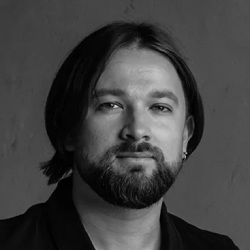
Faranak Ghajavand, partner and head of commercial disputes at BGI, said: “We welcome the Court of Appeal’s decision. A higher court will now consider whether claimants can choose who represents them by acting through the committee.
“The committee was set up under PGMBM’s own contracts specifically to manage the litigation and take important decisions on the claimants’ behalf. Our focus is on the committee having its arguments fully heard, so that the case against BHP can move forward with strength to secure full and fair compensation for all claimants.”
Marcelo Krenak, chairman of the client committee – which is represented separately by City firm Humphries Kerstetter – described the decision as “an important step for the claimants”.
He went on: “The committee was created to be the collective voice of the victims of Mariana, and we will continue to defend their right to choose who represents them. Our focus remains the fair compensation they have been awaiting for more than 10 years.”
Following the High Court’s landmark liability ruling in favour of the claimants last November – and the Court of Appeal’s refusal of defendant BHP’s application for permission to appeal – stage 2 of the proceedings will determine issues of causation, loss and damages caused by the Brazilian dam disaster.
The trial evidence is to be heard from April to December 2027, with closing submissions listed for March 2028. In the wake of the liability ruling, some of the original 600,000 claimants have fallen away.
Depending on what happens, a stage 3 trial may also be required, where each claimant would need to prove their individual damages.











Leave a Comment