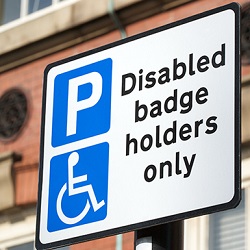
Accessibility: Having an old or listed building was the main problem for chambers
Almost a fifth of the largest 200 sets of chambers are not accessible to mobility impaired people, a Bar Council report [1] has found.
Accessibility varied according to the type of work carried out, with 38% of commercial and chancery sets being totally inaccessible but none of the general civil sets.
A third of chambers (34%) provided full independent access, 17% ‘basic’ independent access, almost a third (31%) limited or restricted access, while 18% were not accessible.
Almost half of the 200 chambers, 47%, provided no information about accessibility on their website.
By far the most common challenge cited by sets that could not offer full access was having an old/listed building, which was mentioned by 86%, followed by a lack of funds (25%), lack of information on which improvements to make and lack of need.
In a blog on the Bar Council website, Sam Mercer, head of diversity and inclusion and corporate social responsibility, said: “We need to do better. The inability to physically enter your chambers will significantly impact your experience of the profession and your career.”
The Bar Council based the report on responses from 147 of the largest 200 sets of chambers by size. If one chambers building was fully accessible but another was not, the set as a whole was treated as fully accessible.
Full independent access meant that disabled people could independently enter the building and circulate through all areas; basic access that they could independently enter and access at least one conference room.
Access was described as limited or restricted if disabled people could not independently enter or move around the building or it was only accessible for a restricted time. Chambers were not accessible if disabled people had “no practical ability” to use them, even with help.
The overwhelming majority (88%) of those who responded had “some form of a plan in place to accommodate a disabled pupil or member”.
After commercial and chancery, crime had the biggest proportion of inaccessible sets (21%), followed by family (19%) and mixed practices (13%).
However, when it came to practice areas with the highest proportion of fully accessible chambers, family sets led the way, with 56%, followed by mixed practices on 38%, and commercial and chancery on 31%.
The report recommended that chambers should “complete an accessibility audit to identify accessibility problems and how they can be resolved or mitigated”, while those that do not currently provide online information about accessibility should do so.
Planning was “vital” and “part of the anticipatory legal duty in relation to disabled clients and service users”. Where chambers were not accessible, a plan was “even more important”.
Researchers recommended that chambers “identify (and cost) options to improve access” for mobility impaired people and “prioritise accessibility” when negotiating leases.
Ms Mercer said lack of accessibility denied “collegiality in casual interaction, social support and learning opportunities from colleagues” as well as the opportunity to attend chambers-based marketing events.
“It also means a barrister or pupil is prevented from dropping into the clerks’ room and from being visible and ‘front of mind’ when it comes to work opportunities.
“Learning from the 2020 pandemic demonstrates working remotely does not mitigate these problems and is not a solution to a lack of physical access to a building and community.”