


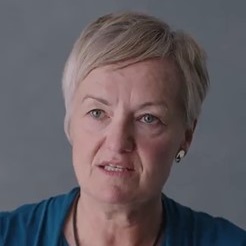
McDermott: JCIO has betrayed its fundamental duty
An almost all-female legal team is working out how to challenge a refusal to investigate allegations of intimidating, sexist and discriminatory conduct by a male judge.
The lawyers have been instructed on behalf of a group of female litigants in the employment tribunal in their bid for a probe into Judge Philip Lancaster in Leeds after the Judicial Conduct Investigations Office (JCIO) refused to open one.
The action is supported by the Good Law Project, which is seeking to crowdfund £13,200 for the initial advice. It has so far raised £3,250.
“What happens now is uncharted territory. But we want to chart it,” the Good Law Project said.
“The first step is to obtain advice on how to make sure the complaints of these women are properly heard, to make sure that women who come before Judge Lancaster in future are protected.
“The legal team will advise on developing a strong case to challenge the failure of the JCIO to investigate Judge Lancaster’s alleged misconduct and to highlight the systemic issues with the employment tribunal system, especially in respect of women and minoritised groups, which are illustrated by this case.”
Emily Soothill, a partner at leading civil rights law firm Deighton Pierce Glynn (DPG), has instructed well-known feminist barrister Dr Charlotte Proudman, alongside Finnian Clarke of Doughty Street and an unnamed “prominent” female KC.
They have together agreed to give advice for a capped fee. The Good Law Project said that, if the advice was positive and the JCIO did not change course, “we will then help them bring legal proceedings”.
According to DPG, the barrister for a GP, Dr Hinaa Toheed, documented that Judge Lancaster shouted at her at least 16 times during a 2022 hearing on her maternity discrimination claim.
Later that year, Jackie Moore, representing her daughter in a disability discrimination case, “described how Judge Lancaster systematically ‘blocked or challenged’ her questions, speaking to her in an aggressive, dismissive, and condescending manner”.
The firm said multiple successful appeals against Judge Lancaster’s rulings “further highlight concerns about his competence”.
In one case, it said, the High Court characterised Judge Lancaster’s comments about a woman as “troubling”.
Last year, the BBC reported that eight women had come forward to complain about the judge.
But DPG said the JCIO has refused to open an investigation, “raising fears that the system is shielding judges from accountability”.
A “critical failure in the employment tribunal system” was the lack of an official court record in many of the cases, it said – there were only Judge Lancaster’s personal notes, “which he refuses to release”.
Alison McDermott, a whistleblower from the Sellafield nuclear plant who also had her case dealt by the judge and is leading the group, said: “The JCIO have betrayed their fundamental duty to ensure judicial accountability. They’ve chosen to protect a system that lets judges abuse their power against women without consequence.
“One woman after another has reached out to me with the same appalling accounts of Judge Lancaster’s conduct—and the crushing dismissal of their complaints. We will not remain silent and stand by as more women are harmed.”
Jo Maugham, executive director of the Good Law Project, added: “Judges are made from the same crooked timber as the rest of us. What’s different about them is that their enormous power amplifies the consequences of their failures.
“So they must be subject to proper oversight and accountability – and we are concerned that that has not happened here.”
The Judicial Office said it did not comment on individual cases.











