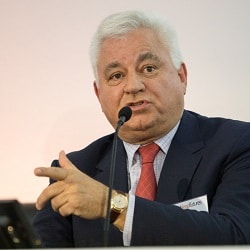
Knowles: Incentive plan
The three senior executives at DWF – the only law firm listed on the main London Stock Exchange – have been awarded 1.5m shares subject to the firm meeting certain performance targets by 2024.
The announcement shows the way in which listed law firms are able to incentivise managers.
Chief executive Sir Nigel Knowles will receive 820,000 shares, chief finance officer 353,000 and chief operating officer 331,000.
The awards, made under DWF’s equity incentive plan, will vest after three years subject to continued employment if they meet the targets on earnings per share (EPS) growth, return on capital employed (ROCE) growth and cash conversion rate over three years to 30 April 2024 – weighted 40% for each of the first two and 20% for the final target.
They will receive 20% of the awards if the firm hits thresholds of 33.8p EPS growth, 26% ROCE growth and 82% cash conversion rate, 50% if it reaches targets of 37.6p, 29% and 91% respectively, and the full amount for 41.3p, 32% and 101% respectively.
The vested shares will be subject to a two-year holding period before being released; no consideration was paid for the grant of the awards and no price is payable on their exercise.
Separately, the trio have also been handed 130,000 shares each under a deferred bonus plan, while Michele Cicchetti, the head of DWF Italy, received 56,000.
The awards represent 50% of the bonus awarded for the period to 30 April 2021. They will vest after three years, subject to continued employment. Again no consideration was paid or will be paid on exercise.
Earlier this month, partners and staff at DWF sold nearly £14m of shares, while in September 2020 DWF partners sold shares worth £4.25m at the first opportunity to dispose of some of the stock they received from the 2019 float.
DWF listed in March 2019 at 122p and reached a high of 142p shortly before lockdown last year. The price fell to 53p in late June last year but has recovered steadily since, closing yesterday at 115p.