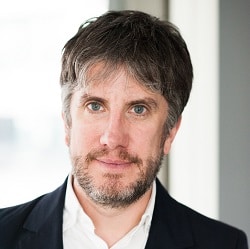
Harper: Reducing risk can end up increasing complexity
Doing nothing is “a legitimate strategy” for lawyers which “maintains focus on key objectives and avoids burnout”, the founder of alternative legal services provider LOD (Lawyers on Demand) has argued.
Solicitor Simon Harper also said lawyers should “adopt a bias for simplicity” to avoid feeling overwhelmed and “embrace uncertainty”, rather than trying to control it.
Mr Harper said that when lawyers were asked to solve a problem, training “prewires us to act”. Most lawyers trained at law firms where the business model was predicated on recording time spent in acting and solving problems for clients.
“And yet we know at a business level that effective strategy is all about allocating scarce resources and making deliberate trade-offs, in other words, choosing what not to do.
“Doing nothing is a legitimate strategy. That ability to decide ‘no’, or at least ‘not for now’, is a strategic skill which both maintains focus on key objectives and avoids burnout. It requires careful communication to anyone expecting you to ‘do something’ but this is time well invested.”
It was often “not just an effective strategy” for feeling overwhelmed or what the report referred to as “overwhelm”, but for good decision-making.
LOD, sold to US company Consilio in 2023, was the first provider of freelance lawyers to companies and law firms back in 2007, a model that has been widely copied.
Writing in the LOD report Overcoming Overwhelm with organisational psychologist Barbara Patchen, Mr Harper said lawyers tended to think that “covering as many bases as possible means that we’re doing our jobs better”, whether it was one more clause, email or meeting.
“In many scenarios reducing risk comes hand in hand with increasing complexity, which brings in the law of unintended consequences.
“For example, well-intentioned but overly rigid risk reduction in a contract can stifle flexibility in a contract, leading to potentially greater harm when unexpected events occur.
“Keeping things simple doesn’t necessarily take less time but it does reduce cognitive overload and gives us more space in our brains to think clearly. When the interdependent parts of a task are reduced, our ability to cope with this is greater.
“By keeping it simple, we not only reduce feelings of overwhelm but also reveal root causes and avoid blind spots.”
Meanwhile, though clients often expected lawyers to “sit firmly at the control end of the spectrum”, they had the choice to embrace uncertainty.
“It’s not just personally useful, it also benefits our organisations. Rigid plans rarely work in 21st century business, which thrives on flexibility, adaptability and adjustments, as we learn along the way.”
Earlier in the report Ms Patchen urged lawyers to “regulate before you react” to something stressful, for example by breathing deeply.
“You have to metabolise your experiences. Just like a gazelle that shakes off trauma after an escape, you need a way to discharge your overwhelm.”
Lawyers should also “reframe the problem and your role”, which could involve “moving from reactive replies to shaping communication norms”, such as “clear response windows” and structured updates, or choosing “when to absorb ambiguity” and when to “reflect it back to drive clarity”.
A further tactic to deal with overwhelm was for lawyers to “reconnect to your core” and ask themselves why they chose the profession in the first place and which principles and values guided their decisions.
“Your principles are your anchor. Without them, you drift into reactivity. But when you lead from your core, you gain clarity – and moral courage.”