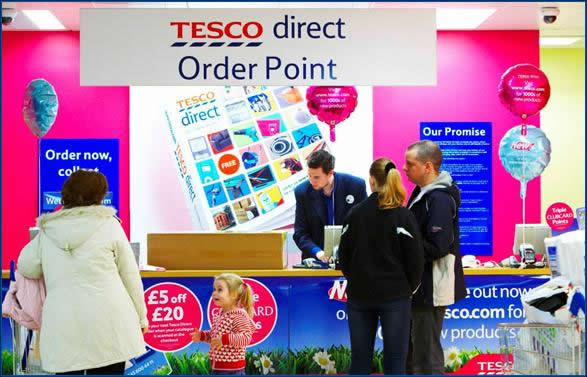
Tesco Law: little enthusiasm among consumers
Consumers of legal services are not tempted by the prospect of household name brands moving into legal services, research has found.
A poll of more than 2,000 people commissioned by the legal research company Jures and in-depth interviews with 100 consumers, also revealed that ‘expense’ or ‘expensive’ was the word most commonly associated with the word ‘solicitor’, while almost half of those interviewed felt the experience represented poor value for money.
The research, contained in Jures’ new report Shopping Around: What consumers want from the new legal services market, found that while Marks & Spencer was the most appealing of six big name brands put to respondents as possible legal services providers (named by 14%), 34% were not tempted by any of them. Only 5% chose Tesco. Asda, Barclays, Halifax and Virgin were the other options. Of these six, only Halifax has a declared interest in providing legal services.
Consumers were given a range of factors that were likely to influence a decision to purchase legal services, and 60% went for quality, 35% for fixed prices, 26% for the reassurance of a brand and 25% for the cheapest price.
“There’s a positive message here for law firms who are willing to take the initiative in a newly competitive market,” said Jures director and report author Jon Robins. “If firms can differentiate themselves in terms of the quality of advice and flexibility on costs, they are giving consumers what they want. It’s a big challenge.” The research flagged up the continuing importance of face-to-face legal advice for many consumers, with 73% wanting to meet with their lawyers even for routine matters, such as drawing up a will or a house move.
Unsurprisingly, clients much preferred fixed fees or ‘no win, no fee’ to other ways of paying for legal services, even though consumers expressed little trust in the lawyers who offer conditional fee agreements – on a scale of 1 to 5, where 5 was ‘trust completely’, only 22% gave lawyers a 4 or 5. The research also uncovered little appetite for paying £75 for an insurance policy that covered unforeseen legal needs.
The in-depth interviews found that after ‘expense’ or ‘expensive’ (used by 23%), ‘professional’ was the next most used word in relation to ‘solicitor’ with 12%. Overall, 43% of the words used were ‘totally negative’ and 28% good, the report says.
Mr Robins said: “Consumers don’t automatically gravitate to the perceived security of high street brands. In fact the ‘reassurance’ of a familiar name was not identified as a compelling reason for choosing a lawyer. Instead, consumers value quality of advice and price certainty, way above the comfort factor of big brands.”
Legal Services Board chairman David Edmonds commented: “What this research indicates is that there is an appetite amongst consumers for better ways to distinguish quality and make choices when it comes to legal services – rather than people simply taking what they’re given or what’s based just around the corner.”
Jures is a Legal Futures Associate. A full copy of the research is available to buy.