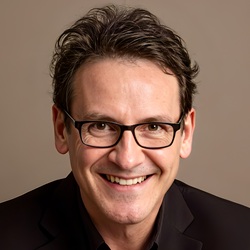
Hayhoe: Current system not working
The moment for structural reform of legal regulation “has arrived”, the Legal Services Consumer Panel (LSCP) says today in a call for a new single independent regulator.
This would abolish the artificial divide between who deals with complaints about lawyers – the Legal Ombudsman for service matters and the regulators for conduct – and also “redraw the regulatory perimeter around risk rather than historical professional titles”.
A 32-page paper, A Regulatory Framework for the Future, argues that “the regulatory framework for legal services in England and Wales is structurally incapable of delivering the statutory objectives set out in the Legal Services Act 2007”.
It continued: “Designed nearly two decades ago, it has become fragmented, inconsistent, and increasingly disconnected from the realities of a modern, technology-enabled legal market.
“Eight frontline regulators operate under one oversight body, each with their own rulebook, compensation arrangements, disciplinary standards, and regulatory culture.”
The panel first called for a single regulator back in 2013 and said today that the warnings it issued then “have proved prophetic”.
It said: “The problems identified in 2013 have not been resolved. They have intensified.”
The call comes in the wake of this week’s report by the independent reviewer of the Legal Services Board (LSB), who found the oversight body had “lost its way” and recommended reforms for the board and longer term a fundamental review of the legal regulation architecture.
The LSCP recommended the creation of a “technology-ready regulator with the mandate to govern AI in legal services”.
The paper argued that any assessment of the LSB could not be divorced from the framework it had to operate within.
“The LSB is expected to co-ordinate and hold to account multiple frontline regulators with different cultures, inconsistent protections, different appetites for risk, limited staff resources, and an incoherent regulatory landscape.
“This structural incoherence weakens oversight and contributes directly to the persistent failures documented in this report.”
Smaller regulators, it went on, “lack the resources to conduct meaningful consumer research, develop sophisticated data systems, or engage in proactive horizon scanning”.
The LSCP cited a range of failures: “Axiom Ince. SSB Law. Mazur. A decade to reach a public beta of the RIS [Regulatory Information Service, a central resource of regulatory information about lawyers]. A complaints system that scattered 100 warning signs [about SSB Law] into silence.
“Compensation arrangements consumers cannot understand. Millions of people unable to access justice. A regulatory perimeter misaligned with modern risk. Lawyers prosecuting innocent sub-postmasters while no regulator saw the systemic pattern.
“Harassment at the Bar documented by television before the regulator could act. Referral fee impropriety discovered through a Panorama investigation rather than proactive supervision. A Solicitors Act reform that risks burdening a Legal Ombudsman already heading towards year-long resolution times.
“The evidence has accumulated for over a decade.”
While fundamental reform is worked on, the LSB should in the meantime use the powers it has under the Legal Services Act 2007 to “align first-tier complaints handling and disciplinary processes across all eight regulators, alongside a clear plan and timetable for moving compensation arrangements towards a single, coherent scheme”.
The panel described Mazur as “a case study in the consequences of a framework that is insufficiently clear about who can do what, insufficiently co-ordinated across multiple regulators, and insufficiently governed to prevent fundamental questions reaching the courts…
“CILEx has called on the government to address the regulatory shortcomings the Mazur judgment represents. The Panel echoes that call. However, the answer is not better guidance from eight regulators. It is structural reform.”
A single regulator did not mean a single way of regulating, the LSCP stressed, noting in particular the Bar’s argument that its members operated differently to other lawyers.
“It would house specialist divisions for different practice areas, expert panels for emerging risks, and dedicated teams for vulnerable consumers. What the current system delivers is not specialism: it delivers variation.”
Moving to activity-based regulation echoes the work of Professor Stephen Mayson.
The LSCP said: “Any service posing a material risk to consumers, regardless of delivery model or professional title, must fall within the regulatory perimeter. This includes AI-generated outputs, automated document services, platform-based triage, and hybrid digital–human models.”
The LSCP acknowledged that a single regulator was “not a guarantee against failure”, as the experience of Ofwat showed.
“The panel’s recommendation is not that a single regulator would be infallible. It is that a single regulator, properly resourced and built around the right checks and balances from the outset, removes the structural barriers that make consistent consumer protection impossible under the current fragmented model.”
LSCP chair Tom Hayhoe commented: “Our position paper confirms what consumers have told us for years, that the current system is not delivering consistent protection.
“We strongly welcome the public bodies review’s recognition of the same problem, and its call for the LSB to reset now, within the existing framework, and to focus its resources where consumers need them most. The panel stands ready to be a close partner in that work.
“We also welcome the review’s recognition that government will need to consider deeper structural reform ahead of the next Parliament, and we will keep making the case to the Ministry of Justice that a single, independent regulator is where that reform should lead.”
***
Legal Futures is holding a Regulation and Compliance Conference on 3 December 2026