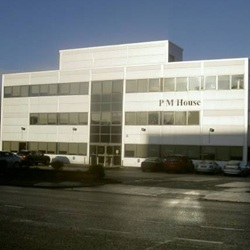
PM Law: Sheffield HQ
A group employing 600 people across multiple law firms and offices around the country suddenly closed its doors this week, sparking widespread uncertainty and confusion.
PM Law Group appears to have at least 14 law firm brands under its umbrella – most prominently PM Law – as well as some related businesses.
The group’s origins are in personal injury firm Proddow Mackay, set up in Maidenhead in 1990, but it is headquartered in Sheffield.
According to a post on LinkedIn yesterday by one PM Law solicitor, “the staff found out at 7.30am [Monday] morning and were told not to come to work. We are all in the dark as to what has happened and have lost our jobs overnight and without warning”.
An article on the BBC website about the Kendall office of Butterworths Solicitors, part of the group, featured a sign in the window that said: “Due to regularity [sic] matters the PM Group of Businesses carried out within this building can no longer trade.”
However, it does not appear that the Solicitors Regulation Authority has closed it down – it too was caught unawares.
A statement on the regulator’s website said: “We understand that Butterworths/PM Law Limited has closed suddenly and not in a manner we would expect. We are in contact with the firm and will take appropriate action to make sure clients are protected.
“We expect that those affected should be updated soon. There is no further information we can provide at this time.”
The PM Law Group website is no longer live but an archived version of it from December said that it had over 600 staff. LinkedIn was flooded yesterday with law firms offering to help and highlighting their vacancies.
The website listed the following law firms as part of the group:
- PM Law
- PM Property Lawyers
- law (Maidenhead)
- GN Law (Huddersfield)
- Gaines & Wilkinson (Keighley)
- John M Lewis & Co (Derby)
- Valerie Holmes Law (Brighouse)
- Angela Viney (West Yorkshire)
- DJ Mackay & Partners (Glasgow)
- Barrett & Co (Reading)
- Wilsons Solicitors (Leeds)
- Butterworths Solicitors (seven offices across Cumbria)
- WB Pennine Solicitors (six offices in South Yorkshire)
- KB Property Law (Sheffield).
With the exception of Angela Viney and DJ Mackay & Partners, all of these firms’ websites were unavailable as of last night.
Several of the firms specialise in conveyancing but some – including PM Law – offer personal injury and other services.
Also in the group are legal expenses insurance and claims management company Lexelle and OSOI Global, an India-based outsourcing business offered fixed-price services to conveyancers, such as title checking.
The owner of the PM Group is Donald Mackay and the websites of four other law firms of which he is a director have gone down too: D’Azur Law, 3M Law and Autonet Law (all Sheffield), and Bridgeview Law (Gateshead).
Financial information about the group is thin as it claimed the exemption from audit. As at 31 October 2024, according to a financial statement filed at Companies House, it had creditors of £3.1m and debtors of £6.2m.