Court of Appeal: very difficult circumstances
The former clients of a solicitor whose dishonesty left them in what a High Court judge described as a ‘Kafkaesque’ situation that wrongly led to their bankruptcy, have seemingly reached the end of the road in seeking legal restitution.
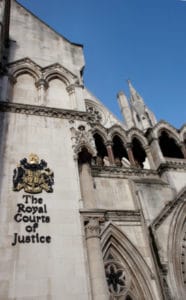
The Court of Appeal dismissed an appeal by Dr Sheida Oraki and her husband Ardeshir Oraki against a High Court judgment in which Mrs Justice Proudman had rejected their claim of breach of duty against their trustees in bankruptcy.
The Orakis claimed the trustees had prolonged the administration of the bankruptcy estates and frustrated their attempts to annul the bankruptcies.
Proudman J observed, however, that “the Orakis were in what I can only describe as a Kafkaesque situation. Dr Oraki has always stoutly maintained, and so it has proved, that they were wrongly made bankrupt but no-one in authority would listen to them when they said so”.
Giving the Court of Appeal’s ruling, Lord Justice David Richards said the background to the bankruptcies was “very disturbing”.
He explained: “They were based on a judgment obtained against them by a firm of solicitors, Dean & Dean, in respect of apparently outstanding fees. Judgment was entered on 16 February 2004 for damages to be assessed, with an interim payment of £5,000 and costs of £3,858.
“Over eight years later, on 23 October 2012, it was ruled that the bankruptcies should be annulled and the judgment set aside, on the grounds that the judgment had been based on fraudulently charged fees.
“The judge, Mr Robert Ham QC (sitting as a deputy High Court judge), said that there had been a miscarriage of justice.”
His decision was made in the light of evidence that the solicitor at Dean & Dean who had handled the Orakis’ matter – Shahrokh Mireskandari – had been struck off, and the firm closed down.
In 2012, Mr Mireskandari was found guilty of 23 out of 25 charges before the Solicitors Disciplinary Tribunal, 21 of which included findings of dishonestly.
As well as multiple examples of misconduct at Dean & Dean, it found that he had been admitted as a solicitor after making dishonest misrepresentations that secured an exemption from what was then the common professional examination and also a year of his training contract. He also failed to disclose a criminal record in the US.
He was, said Proudman J, “a flamboyant character with powerful friends, such as Mr Keith Vaz MP and Commander Ali Dizaei of the Metropolitan Police”.
But David Richard LJ concluded that while the Orakis have “justifiably strong views about their predicament flowing from the dishonest activities of Mr Mireskandari”, there was no basis for their claims against the trustees, who had had to perform their duties “in very difficult circumstances”.