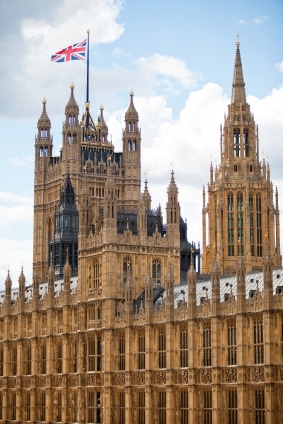
Parliament: 550 responses to call for evidence on government proposals
Government plans to streamline the process of consulting on policy changes will diminish public engagement in decision making and with it the “free, world class” advice of City law firms, according to a senior spokesman for the capital’s lawyers.
David Hobart, chief executive of the City of London Law Society, delivered the broadside against the plans to introduce new ‘consultation principles’, which would replace a 2008 code of practice that determined consultations should normally last 12 weeks or more.
Instead the government said in July that it will take a “more proportionate and targeted approach” to consultations, including a range of timescales at the discretion of individual departments.
The House of Lords’ secondary legislation scrutiny committee’s call for evidence on the issue, which ended on 30 November, received 550 submissions.
Mr Hobart said “the pendulum has swung too far against public consultations… for no obviously good reason”.
He argued the government’s desire for a “pacier” overall policy process had mistakenly led to a disproportionate focus on faster consultations, without demonstrating a correlation between the length or scale of past consultations “with the outcome of their corresponding policy decisions”.
The absence of proper consultation on the changes was revealing, he continued: “It is difficult to avoid the conclusion that [the] government is more interested in reducing the burden of handling public responses than it is in learning what the responses have to offer.”
Concluding, Mr Hobart said the new guidelines actively discouraged public engagement. “Policy making is to be the preserve of Westminster, Whitehall and experts, but increasingly immune to public influence.”
Well-managed consultations ultimately save money and improve decision making, he argued. “In the case of the City of London law firms, our work provides government with free, world class, legal advice that [it] could not otherwise get.”
He went on: “I accept entirely that the process of consultations represents a significant burden for a smaller civil service, and that badly managed consultations can result in poorer and slower decision-making.
“But that is no argument for not seeking to manage public consultations in such a way that they are parallel activities to the critical path of policy-making, rather than sitting uncomfortably on the critical path. Above all, ‘pacier’ consultations will not lead to better decision-making.”