


Rugby litigation: Disclosure failure
A judge has allowed hundreds of rugby head injury claims to go ahead despite not complying with unless orders, after taking “comfort” from the players changing solicitor.
Senior Master Cook said that had Richard Boardman, principal of London firm Rylands Garth, continued to conduct the litigation, “I could not have had any confidence that future court orders would be complied with timeously or at all”.
He went on: “In the circumstances the appointment of new solicitors with sufficient resources to conduct this litigation is another important factor to weigh in the balance.”
Those solicitors are class action specialists KP Law, with help from Leigh Day, which was already assisting Rylands Garth.
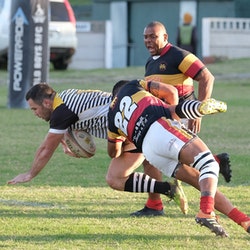
There are around 1,000 claimants overall spanning the two rugby codes, who argue that they sustained serious head injuries due to the collision forces during rugby matchplay or training, which led to both concussions and sub-concussive permanent brain damage. They claim the defendant governing bodies did not do enough to protect them.
Senior Master Cook said: “As far as I can ascertain from the Law Society web site, Rylands Garth is a relatively new firm with one qualified solicitor, Mr Richard Boardman.
“Rylands Garth has been conducting not only this litigation but another group claim involving association football players who allege they have suffered concussive head injuries caused by heading the ball. These claims are also being brought against the governing bodies of the sport.
“As will become apparent, I have been concerned for some time as to the ability of Mr Boardman and Rylands Garth to deploy sufficient resources to conduct such complex and large scale litigation.”
The judge was ruling on applications made by the defendants for declarations that a large number of claims stood struck out by reason of the claimants’ failure to comply with unless orders relating to disclosure of medical records.
He detailed the players’ decision to change solicitors. A witness statement from Alix Popham, a former Welsh international on behalf of the union players committee, told the court that the committee and claimants “have progressively lost confidence in the ability of RGL [Rylands Garth] to adequately manage these proceedings in our best interests, including as result of the failures of RGL to comply with the court’s requirements and to communicate adequately with the committee and the claimants”.
He explained that the players had intended to switch to Leigh Day but it was unable to complete its due diligence processes in the timeframe the committee wanted, leading them to KP Law.
“Should the court grant the claimants relief from sanctions, KP Law will put in place a heavily resourced team, supervised by a designated senior and experienced lawyer and will ensure that the claimants are able to conduct the future litigation in compliance with the court’s requirements,” Mr Popham said.
The players have also appointed James Oldnall, managing partner of Milberg London, as independent counsel to the committee “to advise us in relation our position vis-à-vis KP Law and [litigation funder] Asertis (as Asertis and KP are part of the same corporate group)”.
Between the two groups, there were 530 claimants whose cases stood struck out due to inadequate disclosure.
“I am however prepared, with some hesitation, to grant relief from sanction in principle to all players whose claims stand struck out,” said Master Cook.
“Any such relief will be subject to conditions which will be decided at a further hearing, however the minimum terms would be payment of the defendants’ costs of securing compliance with the claimants’ disclosure obligations to date and production of the missing documents.”
In going through the Denton test for relief from sanction, the judge concluded that the breaches of the unless orders were serious and significant, and said the fault lay with Mr Boardman.
“Mr Boardman has been repeatedly warned by the court about the scope of his disclosure obligations and he has been given several opportunities to comply with the June 2024 order. His continued failure to grasp a fundamental element of civil litigation cannot in any circumstances amount to a good reason for the default.”
In evaluating all the circumstances, as required by the third stage of the test, the judge said he took into account that the breaches were not caused by the individual claimants.
“Given the vulnerability of many of these claimants, it might be said that they should not be punished for the sins of their legal representative…
“I take from the cases, the fact that individual claimants are blameless and that the default is that of their solicitors, with the result that the claimants would have to rely on a claim for loss of chance against their solicitors, are both factors which are capable of founding an application for relief from sanction.”
If the claimants were forced to rely on suing Rylands Garth, the number of claims “would place significant additional pressure on the resources of the court”.
Other facts in favour of granting relief were that the litigation was at an early stage, it was still possible to have a fair trial, the litigation was “of particular wider public importance and requires a proper range of test claims”, and new solicitors “in which the court can have confidence”.











