


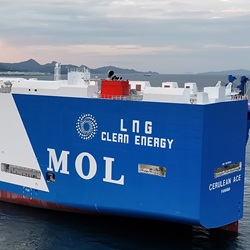
MOL: One of the defendants in the claim
Payouts from the car delivery charges collective action will start at £25, with consumers and businesses set to receive up to £56m of the £93m total settlement.
Costs, fees and disbursements make up a further £34m but any outstanding payments could still be met if there is lower-than-expected take-up by members of the affected class.
The Competition Appeal Tribunal (CAT) praised the “serious and evidence-based exercise” undertaken by class representative Mark McLaren to understand likely claimant behaviour and participation in the damages distribution.
It follows the poor experience of the first distribution from a collective action, the boundary fares action against Stagecoach South West Trains. Despite an estimated 1.4m rail passengers potentially eligible for a share, only £216,500 was claimed by class members, leaving almost £10m of unclaimed damages.
That case “demonstrates that the recovery of substantial sums on behalf of a class does not necessarily translate into substantial distributions reaching represented persons”, said Judge Hodge Malek KC.
This claim – which was originally valued at around £150m – centred on the fees charged for shipping 17m new cars and vans to the UK made by major European car markers; they themselves were not involved.
The vehicles were sold or leased by UK businesses and consumers between October 2006 and September 2015 and five different defendants have now settled.
Individual payouts for consumers and businesses will start at £25 for the first vehicle, a further £5 for vehicles two to six and at least £2.50 for each eligible vehicle thereafter, with the potential for another £2.50 depending on the number of claims received.
Payment will be made in various ways, including conventional bank transfer, Open Banking, PayPal, Nectar points, vouchers and charitable donation options.
Mr McLaren’s modelling assumed take-up rates of 5% for consumers, 10% for businesses, 60% for Motability consumers and 75% for fleet owners, but Judge Malek predicted that the “actual take up rates for each segment of the class may well be materially lower” than these figures.
One of the defendants argued that payments should start at £15, as this more accurately reflected the loss, and that £25 was a ‘windfall’.
But Judge Malek said: “The distribution plan is not intended to operate as a mechanism for precisely reproducing the estimated loss suffered by each represented person…
“The purpose of the proposed first-vehicle payment is therefore not purely compensatory. It is also intended to encourage represented persons to engage with the distribution process and submit claims.”
He did not accept that £25 would result in significant overcompensation, given the lower amounts on offer for subsequent vehicles and the evidence that many of those in the class bought or leased more than one vehicle during the relevant period.
The damages are made up of £34m in guaranteed damages for class members but if this is not all spent, the rest will go to the Access to Justice Foundation.
A further £22m is available if take-up is above that, failing which it could pay any outstanding costs, fees and disbursements, be paid to the foundation, or revert to certain defendants that settled early. The distribution will cost around £2.5m.
Most of those claiming for six or fewer vehicles will only need to supply details of the brand and sign a statement of truth confirming they owned or rented the vehicles. For companies registered with the Driver and Vehicle Licensing Agency fleet database, claimants will be automatically presented with their total number of eligible vehicles and compensation amount.
Judge Malek said the communications strategy was “substantially more ambitious” than previously seen in collective proceedings distributions.
“It combines traditional media activity, digital advertising, social media, targeted communications, partnerships with consumer organisations and direct engagement with significant categories of claimant.
“I attach particular significance to the proposed engagement with Motability, the British Vehicle Rental and Leasing Association, local authorities, Which?, MoneySavingExpert and Nectar.”
Mr McLaren will provide the CAT with a monthly report on how the exercise is progressing and his solicitors Scott+Scott will deliver a report at the end of the process on how the process worked and any lessons learned.
Mr McLaren, who began the action in 2020 and was funded by Woodsford, said: “We’ve done everything we can to make this process as easy as possible for those affected.
“This settlement has been secured on behalf of consumers and businesses who were overcharged for new vehicles, because of hidden agreements between companies they’d never heard, which secretly cost them money. They now deserve to get that money back.”












Leave a Comment