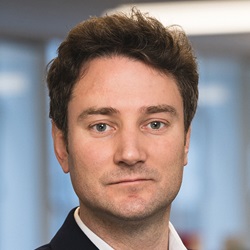
Orpin: Focus on unregulated market
The case for a review of the list of reserved legal activities “is growing, and we intend to make it”, the new chief executive of the Legal Services Board (LSB) has said.
In his first major policy speech since being appointed in January, Richard Orpin also highlighted the possible need to establish minimum standards for AI legal tools.
Speaking in London, he outlined how the legal market has “changed beyond recognition” since the reserved legal activities were enshrined in the Legal Services Act 2007, the uncertainties around them highlighted by the Mazur case.
The six reserved activities are advocacy, litigation, conveyancing, probate, notarial work and the administration of oaths. Non-authorised people (essentially non-qualified lawyers) can handle any other type of legal work.
Recasting the list could fundamentally change the shape of the legal market.
“AI is blurring the boundaries between regulated and unregulated legal advice. New business models are emerging that don’t map neatly onto the categories the Act anticipated,” Mr Orpin explained.
With unregulated sector “large, diverse, and growing”, the question of whether the current scope of reservation “is still calibrated correctly… is becoming harder to avoid”.
He continued: “I am not today announcing a full statutory review. The LSB has previously said that a statutory review of reserved activities requires a robust evidence base. That is still true.
“But I am saying this: the case for such a review is growing, and we intend to make it. We will be engaging with government and everyone across the sector on this question.”
He argued that as AI and technology reshaped the legal market, the LSB’s goal of ensuring that regulation delivered outcomes that genuinely mattered to consumers “becomes more important—not less”.
He added: “But the frameworks we have were, for the most part, built for an analogue world, or at least for a world where the pace of change was manageable within existing structures.”
The LSB is currently conducting consumer research to understand what people expect from AI-powered legal tools.
“The early findings are striking,” Mr Orpin said. “Consumers are thoughtful, not naïve. They understand that AI tools vary in quality.
“They are deliberating thoughtfully about the need for human involvement and accountability—what some of our participants have what could be described as ‘a human in the loop and a human on the hook’.
“But they also show a troubling acceptance – or perhaps resignation – to tiered services, where paid-for options are assumed to be better quality.”
This raised the fundamental regulatory question of minimum standards for AI legal tools that ordinary people should be able to rely on.
“We will publish the full findings of this research later this year. But I can say already that it is pointing us towards harder questions than simply whether consumers can access AI legal tools.
“It is pointing us towards whether those tools are genuinely trustworthy – and whether we have the right mechanisms to ensure they are.”
AI was also accelerating the growth of the unregulated sector, Mr Orpin went on, pointing to the LSB’s powers in the Legal Services Act to enter voluntary regulatory arrangements, such as to accredit self-regulatory schemes run by others, or to publish registers of accredited providers.
“We have never used those powers. I think the time is coming when we must consider doing so.”
He said voluntary standards could provide “meaningful protection” for users of AI legal tools without creating unnecessary barriers to innovation, while accreditation “could help consumers navigate a confusing and opaque market”.
He stressed that it would be “disproportionate and counterproductive” to regulate everything.
“But I do think there is a strong case for establishing a clear framework of minimum quality standards for consumer-facing AI legal tools – one that industry can voluntarily adopt, that consumers can recognise, and that we can hold up as a benchmark.
“The alternative is a market where consumers cannot tell the trustworthy from the dangerous.”