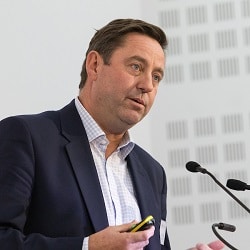
Beech: Year of step changes
Revenue at listed law firm consolidator Knights was up 8% in its last financial year to £162m, with underlying profit before tax 11% higher at £28m, its annual results have shown.
Reported profit before tax fell by £2.5m to £12.3m, however, primarily due to acquisition-related costs.
The firm’s share price jumped 8.5% as a result to 160p – the price began the year at 105p, although reached a high of 197p in July.
Knights completed two major acquisitions in the 12 months to 30 April 2025 – Thursfields and IBB Law – and has since announced three more: a £16.6m deal for Essex law firm Birkett Long, followed by 33-lawyer Sussex firm Rix & Kay and then small Cardiff firm Le Gros Solicitors to mark its entry into Wales. This was Knights’ 26th acquisition since listing in 2018.
The results showed the firm’s gross margin rising from 48.8% to 50.5% and underlying profit before tax margin up from 16.9% to 17.3%.
Lock-up days were 86, and debtor days “remaining industry leading at 31”.
Knights’ net debt soared from £35m to £65m, mostly due to acquisition consideration. But its final dividend of 3.05p means overall a 9.3% increase in the total dividend for the year to 4.81p.
Last November, the firm agreed with HSBC UK, AIB (GB) and NatWest to extend its revolving credit facility to provide total committed funding of £100m – an increase from the existing £70m – until November 2027 (extended by a year).
“With these extended facilities, the group is in a strong financial position with sufficient headroom and flexibility to enable us to continue to execute our growth strategy,” investors were told.
Chief executive David Beech said: “Our proven strategy continues to deliver, as shown by our double-digit profit growth and enhanced margins during the year, despite ongoing macroeconomic challenges.
“This has been a year of step changes for the business, with strategic progress and a strengthened leadership team embedding enhanced operational discipline – all underpinning the group’s platform for future growth.
“We have built strong recruitment momentum and reduced churn, while advancing our value-accretive acquisition strategy – including our largest acquisition to date [IBB] in the second half – and continuing to win new clients.”
It calculates churn as the number of fee-earners who have been with the firm for a year before leaving as a percentage of the overall cohort. This had been high in the first half of the financial year but reduced to 10% in the second half, making it 15% across the whole 12 months.
Knights also recruited 51 senior fee-earners during the year, compared to 40 in 2023/24. All new recruits, including those that join via acquisition, now go through induction at the firm’s Stoke headquarters.
“This is supporting seamless integration into the business and embedding the core aspects of our unique, collaborative culture and model from day one,” Mr Beech said.
The Stoke office also hosts regular forums for partners and senior associates to support “a stronger team culture and better understanding of the breadth of our services and our business strategy”.
Mr Beech added: “We have started the current financial year in line with our expectations and are well positioned to seize the opportunities presented by the structural trends in our industry.
“We are now benefitting from increased recognition of our differentiated proposition as a leading brand, which combines national scale and premium services with local presence and relationships.”