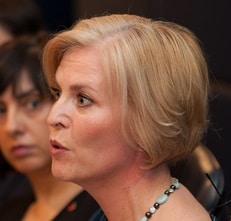
Blacklaws: We need to understand progress, barriers and support remedies
Three-quarters (74%) of male lawyers believe there has been progress on gender equality in the legal profession over the past five years but less than half (48%) of their female colleagues agree, a global survey has found.
The survey of almost 7,800 lawyers by the Law Society – published to coincide with International Women’s Day – also said that unconscious bias was the most commonly identified barrier preventing women from reaching senior positions.
Over half of lawyers cited unconscious bias (52%), followed by 49% naming the “unacceptable” work/life balance demanded for senior level jobs and 46% male-orientated networks or routes to promotion.
The survey, described by the society as the biggest ever international study of women in the law, gathered responses from 7,781 lawyers, including 5,758 women, 554 men and 1,449 whose gender was unknown. Two-thirds (67%) of the lawyers were based in England and Wales.
A majority of lawyers were aware of the gender pay gap in their organisation, but only 16% reported “visible steps being taken” to address it.
An overwhelming majority thought that a flexible working culture was essential to promoting diversity.
However, only 52% of respondents were working in an organisation where flexible working was “consistently enforced”, with 37% in firms where there was “provision” for it.
Among the measures lawyers suggested for supporting women in the law were mentoring and sponsorship, engaging men in the equality debate, celebrating leading women in the profession, role modelling family-friendly practices, networking opportunities and improving access to flexible working.
Almost half of lawyers (43%) said diversity and inclusion training was “consistently enforced” in their workplaces, while 41% felt that they benefited from regular performance reviews.
Christina Blacklaws, vice president of the Law Society, said: “While more and more women are becoming lawyers, this shift is not yet reflected at more senior levels in the profession. Our survey and a wider programme of work during my presidency in 2018-19 seek to understand progress, barriers and support remedies.
“With our Women in Leadership programme, the Law Society is committed to giving women and men in law the tools to make positive changes towards gender equality.
“Every law firm, solicitor and client will benefit from greater equality in our places of work. I believe our justice system will also be stronger if the legal profession better reflects the values we uphold.”