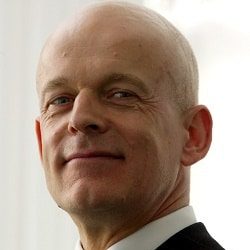
Fulford: Completely disappeared as an issue
Being a judge who “happens to be gay” has “completely disappeared as an issue”, the vice-president of the Court of Appeal (Criminal Division) has said.
Sir Adrian Fulford said the challenge now was for society to be “responsive to the new needs” of people “in terms of who they are and their identities”.
Sir Adrian, who said that when he first applied to be a judge in 1994 there was not a single “openly gay” judge to act as a role model, said his sexual orientation had become “totally and completely irrelevant”.
He went on: “I long ago ceased to detect any prejudice, resentment or difficulty on the part of any of the other judges I worked with.
“It’s more than faded into the background, it’s completely disappeared as an issue. If either you’re quiet about it or you make it clear to your colleagues, it just doesn’t matter.”
Speaking on a Judicial Office video to celebrate LGBTQ+ History Month, the judge said the “real period of change” in attitudes as he experienced it was between 1994 and 2002.
When he became a barrister in the mid-1970s, there was a “mix of attitudes” on the bench regarding sexual orientation.
“I encountered quite a lot of hostility, as well as a lot of friendliness and kindness. There were too many judges back then who found it a very difficult, and for some rather unpleasant, issue.”
When he applied to be a recorder in 1994, he was the “first individual that the Lord Chancellor’s Department [now Ministry of Justice] had to deal with who was openly gay”.
Sir Adrian said: “There was no-one who had gone before me when I applied for a judicial position who was out.”
He was “confronted by a panel of five men in suits who sought to dissuade me from continuing with my application” and asked “what were really upsetting and quite troubling questions about my personal life and the details of my personal sexual life”.
Lord Mackay, the Lord Chancellor at that time, found out what had happened and “stopped that element of the process, which reverted to the normal procedures”. Sir Adrian was appointed a recorder.
When Lord Irvine arrived as Lord Chancellor in 1997, and later with Sir Hayden Phillips as permanent secretary, they “could not have been more welcoming and made it clear that my sexual orientation was irrelevant”.
From a situation that was “still really quite grim” in 1994, by 2002, when he was appointed a High Court judge, things had “started to change very, very considerably”.
He said that gay people who wanted to be judges now did not have “anything to worry about at all”.
However, he said society as a whole “has got to be responsive to the new needs” of people living in this country and their need “to be recognised in terms of who they are and their identities”.
He added: “I think that particularly people of an older generation need to spend time understanding the circumstances that are confronting people who are facing some kind of discrimination that has historically not been properly recognised by society at all.
“That is for me the stand-out change I hope will happen in the coming years.”