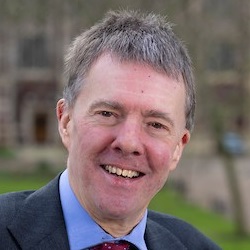
Neale: Inherently complex cases
Complaints about contentious social media posts by barristers have fuelled a jump of a third in reports to the Bar Standards Board (BSB).
The regulator’s quarterly performance report, put before last night’s meeting of the BSB’s full board, showed that its contact and assessment team (CAT) received almost 580 reports between April and June this year, the highest in a single quarter for the last four years.
Director general Mark Neale told the board that the increase was “largely driven” by reports of social media use relating to “international events”. This likely refers to the conflict between Israel and Hamas.
Such cases, he explained, were “inherently complex” because the regulator has to strike the appropriate balance between a barrister’s free speech rights and the damage they may have caused to the reputation of the profession. This often required external legal advice, he said.
He said the BSB had managed to maintain the CAT’s performance levels by reinforcing the team and calling on the support of an external law firm.
The performance report added: “This does, however, illustrate once again the susceptibility of our workload to unpredictable fluctuations. These fluctuations cannot sensibly or economically be managed through permanent hirings (unless a fluctuation becomes an established trend.)
“The senior leadership team is, therefore, going to review how we provide for greater short-term resilience in our operations.”
The BSB’s much-criticised performance remains under close scrutiny by the Legal Services Board and this report recorded that it hit 12 of its 20 targets in the quarter, with two narrowly missed. It continues to be strongest on the quality of its decisions.
The positive news included that “the tide has turned on authorisation applications, with more applications decided than received and a consequent drop in the caseload – the first such drop for many quarters”.
However, the caseload remained high due to a spike in March in applications for admission to the Bar as a transferring qualified lawyer (TQL). This preceded an increase in the fee charged by the BSB.
The volume of TQL applications – particularly from the Indian sub-continent – has been a problem for the regulator for a considerable time [1].
But its efforts to tackle the issue mean that twice as many TQL applications were processed as compared with the same time last year.