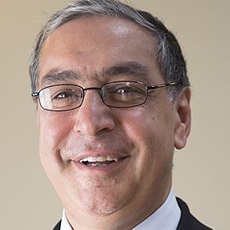
Midha: Not about being ‘woke’
Barristers should be under a professional duty to actively promote anti-discriminatory attitudes and behaviours, it has been suggested.
This was not about requiring barristers to be ‘woke’, said Dr Arun Midha, but rather showing respect for one another.
Dr Midha has a background in regulation, standards and conduct, serving on a number of UK regulatory bodies, including the Bar Standards Board’s professional conduct committee and the House of Commons’ committee on standards, the latter at the time when current Bar Standards Board (BSB) chair Kathryn Stone was parliamentary commissioner for standards.
Writing for the Bar Council’s Counsel magazine, he said the “significant position” barristers in society meant they should set an example by “proactively promoting diversity, equality, and inclusion”.
It comes as the Bar Council’s independent review of bullying and harassment, headed by Harriet Harman KC, is receiving evidence, while the BSB will shortly review of its equality rules, and particularly on whether to replace core duty 8 – ‘You must not discriminate unlawfully against any person’ – with more positive duty to ‘advance equality, diversity, and inclusion’.
Dr Midha said these gave both organisations the opportunity “to promote tolerance and inclusivity as core values and re-examine the code of conduct to make it explicit that bullying, harassment, sexual harassment, which can manifest in racist attitudes, have no place in the profession”.
He noted that two members of the review’s reference group, Professor Michael Maguire and Dr Robin James, have developed approaches to similar issues in the context of MPs’ conduct.
The question, Dr Midha, was whether the profession should be “more active and specific in its code about combating bullying, sexism and racist attitudes”.
“I think so,” he went on. “Having a code of conduct that states a general opposition to discriminatory attitudes is seldom sufficient, as appears clearly to be the case given the volume of cases involving allegations of bullying, racism and misogyny levelled at members of the profession.
“The Bar should go significantly further than the sentiments set out in the current code. In addition to core duty 8, the Bar Council could promote a change to the BSB code of conduct that could incorporate specifically the values of anti-racism and anti-sexism with a specific clause for all the profession to actively promote anti-discriminatory attitudes and behaviours through the promotion of anti-racist and anti-sexist attitudes.”
He suggested that this could be: “Barristers can only be effective when they inspire trust by setting a good example of anti-discriminatory attitudes and behaviours through the promotion of anti-bullying, anti-racism, anti-sexism, inclusion, and diversity.”
Dr Midha stressed that this was “not about requiring barristers to be ‘politically correct’ or ‘woke’. Rather, these values are rooted in basic respect for one another.”
The Bar Council recently called on the BSB to let it lead the way on equality, which the regulator firmly rejected.