BSB: Long delay in progressing case
A barrister has been suspended for six months after being convicted for what a tribunal described as “a sustained, angry and violent physical assault” which was “clearly the result of heavy drinking”.
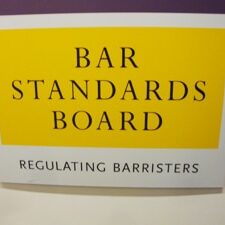
The Bar disciplinary tribunal said Mark Peter Giles “promptly self-reported” his conviction for assault by beating to the Bar Standards Board (BSB) in December 2021, but “the case ‘fell between the cracks’ at the BSB”, causing a “long delay”.
Mr Giles, who was called to the Bar in 2010 but did not complete pupillage, accepted a single charge of professional conduct by behaving in a way that diminished trust and confidence in himself and the profession.
The unregistered (ie, non-practising) barrister was convicted of assault by beating in August 2021 and was sentenced in December that year to a community order with a rehabilitation activity requirement and order to pay prosecution costs.
“He promptly self-reported that matter to the BSB, though long delay was then incurred as the case ‘fell between the cracks’ at the BSB when the caseworker left and the case was not reallocated.”
The tribunal said: “Mr Giles himself has no recollection of the events surrounding the assault, but the facts are not in dispute, as described by Person A and Person B, who intervened at the end of the episode.
“The assault was a sustained, angry and violent physical assault causing significant, but fortunately not lasting, injuries. It must have been very frightening for both Person A and Person B.”
The tribunal described the assault as “unprovoked” and “clearly the result of heavy drinking”. The intervention of Person B “may well have prevented more serious consequences”.
Although “this was a serious assault which could have been worse”, the tribunal said there was “significant mitigation”.
Mr Giles pleaded guilty at the first opportunity, self-reported promptly to the BSB and expressed remorse which the tribunal accepted was genuine.
“The incident effectively ended his marriage, and he has, for the time being at least, been deprived of his professional indemnity insurance. The tribunal have evidence of significant health problems which are, so far as possible, still being addressed.”
The tribunal said there was “no indication of future risk in relation to Mr Giles’ professional dealings or personal life, provided at least that he is not affected by drink or stressful circumstances”.
The task of the tribunal was “not to impose second punishment” but “meet what is required to maintain public trust and confidence” in the profession. Suspension was necessary to mark the seriousness of offence and the need to maintain trust and confidence.
The BSB applied for £1,560 in costs. The tribunal said it had been “reminded of the need in appropriate cases to reflect delay insofar as it may have an impact on the amount of costs to be awarded”.
Since this was “a case which could and should have been processed more swiftly”, the tribunal reduced the costs Mr Giles was ordered to pay to £1,250.
A BSB spokesman said: “Assault is a serious matter and the tribunal’s decision to suspend Mr Giles from practice reflects this. Such conduct is likely to diminish the trust and confidence which the public places in him or in the profession.”