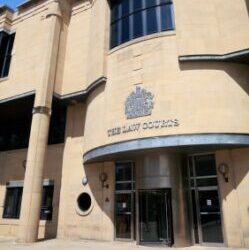
Bradford court: Fundamental dishonesty ruling
A non-practising barrister who had his personal injury claim thrown out as fundamentally dishonest has been banned for returning to practice for nine months.
Victor Adiamah was also found to have held himself out as a practising barrister in the witness statement that formed part of his claim for damages.
Mr Adiamah, who was called in 2012, discontinued his claim for compensation after a road traffic accident without explaining the discrepancies between his own case and the other driver’s unchallenged evidence.
But the judge at Bradford Combined Court Centre in March 2019 found that the barrister had been fundamentally dishonest, meaning that he lost the protection of qualified one-way costs shifting that personal injury claimants otherwise have in the event their claims are unsuccessful.
Those found guilty of fundamental dishonesty can also be pursued for contempt of court.
A Bar disciplinary tribunal found that Mr Adiamah had behaved in a way which could reasonably be seen by the public to undermine his honesty.
Further, by holding himself out as a practising barrister when he was not authorised to do so, he had behaved in a way which was likely to diminish the trust and confidence which the public places in him or in the profession, the tribunal said.
It decided he should be prevented from applying for a practising certificate for nine months as a result.
A spokesman for the Bar Standards Board said: “Behaving in a way which leads a judge to describe you as fundamentally dishonest and holding yourself out as a practising barrister when you are not entitled to do so are serious matters.
“The tribunal’s decision to prevent Mr Adiamah from applying for a practising certificate for nine months reflects the expectation that barristers are not only honest but are seen to act honestly, including when they appear as a party to a case.”
The tribunal’s decision is open to appeal.