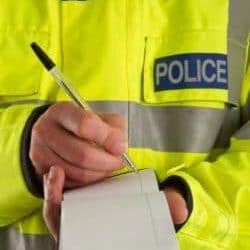
Police: Barrister failed to stop when requested
A barrister convicted of drink driving before the pandemic and twice convicted of driving while disqualified five years later has been disbarred.
A Bar disciplinary tribunal said “the multiplicity of these offences and the serious nature of them” meant Paul Wynell-Sutherland had “fallen very much below the standard required of a barrister”, which he acknowledged.
“We also consider that the risk of a recurrence of the type of behaviour which has brought discredit on the barristers’ profession must be guarded against.”
The tribunal heard that Mr Wynell-Sutherland, called in 2000, was convicted of drink driving in July 2019, having tested at more than three times the legal limit, and failing to stop when requested to do so by a police constable in uniform.
He failed to report the conviction promptly to the Bar Standards Board (BSB), which only learnt about it four years later.
Mr Wynell-Sutherland was convicted of two offences of driving while disqualified in February 2024, which he again failed to report to the BSB.
In the first case, he “provided a roadside breath test which was positive but then failed to provide an evidential sample of breath while in custody”. In the second he failed to provide any breath specimen.
The tribunal said Mr Wynell-Sutherland’s “serious repeat offending” involved the commission of six criminal offences in all.
“Fortunately, no death or injury resulted from the driving even though we know that in 2019 the respondent was very greatly over the limit. Likewise, no other road user was affected by the fact that the respondent was driving whilst disqualified (and therefore uninsured).”
However, the tribunal said the impact on public confidence in the legal profession was “severe” as members of the public “would be highly concerned that this type of offending could be done repeatedly by a barrister”.
Mr Wynell-Sutherland admitted diminishing public trust in the profession through his motoring convictions and failing to report them to the BSB.
The barrister submitted in mitigation that he “believed that he was no longer disqualified” when he committed the first 2024 offence, which he put down to technical problems after doing an online course which would have reduced the length of the ban.
Even if this was the case, the tribunal said he must have known “full well” that he was disqualified on the second occasion, given he had been arrested for it only a number of weeks earlier.
He said the second instance was just him moving his mother’s car as she was unable to do so.
Although it “would have been hard to challenge any of the charges brought by the BSB”, nevertheless Mr Wynell-Sutherland “had the credit of indicating in advance his admission in respect of all matters”, which “links with much evidence from him in relation to remorse”.
One of the reasons why he wanted to remain a barrister was to do pro bono work, which he had done a lot of in his career. Other mitigation included medical evidence and strong +references.
But the tribunal concluded: “It is our unanimous view, that to satisfy all of the purposes of imposing sanctions, and specifically in order to protect the public and to maintain public confidence and trust in the profession and the enforcement system, the only realistic option is to order a disbarment.
“In our view, this is what the public would expect to happen where a barrister has behaved in the way that the respondent did.”
Given his means, the tribunal made no order for costs.