

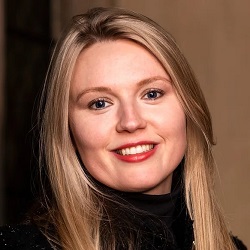
Proudman: Wants directions hearing held in public
The secrecy of proceedings at the Bar disciplinary tribunal is under scrutiny in two high-profile cases where one barrister wants privacy and the other more openness than is usually the case.
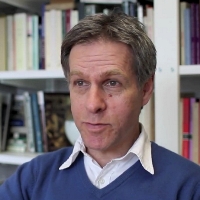
The Times reported last Wednesday that former Criminal Bar Association chair Jo Sidhu KC is facing allegations at the tribunal that he behaved inappropriately with at least four women. He denies the claims.
Other reports say he had applied for anonymity – a ship that now appears to have sailed – and for the tribunal hearing to be held in private. According to Louise Tickle, a journalist who has campaigned for greater openness in the family courts, requests by the media to argue against the anonymity application have been refused.
Meanwhile, self-declared feminist barrister Dr Charlotte Proudman sought to have a directions hearing in the Bar Standards Board’s (BSB) prosecution of her held in public.
She is facing the proceedings over a series of tweets criticising a judgment of Sir Jonathan Cohen for remarks he made in a family case two years ago. Dr Proudman is applying to have the prosecution thrown out on the basis of discrimination, in that the BSB has treated barristers who have abused her online more leniently.
Ms Tickle said HHJ Jonathan Carroll refused to make the directions hearing public, “mainly on the ground that the privacy rights of the male barristers Proudman cited had to be protected. Their tweets remain online”.
She said the judge also refused to hear argument from journalists who had attended in the hope of reporting on the case.
In a statement, the BSB said it believed that tribunal hearings of the cases it brought “should generally be held in public” to maintain the confidence of both the profession and the public.
But it pointed out that the Bar Tribunals and Adjudication Service, which runs the tribunals, was independent of the BSB.
“Directions hearings deal with the process to be followed in a tribunal hearing and, in some cases, whether or not a case should proceed to a tribunal at all. Directions hearings are heard not by a tribunal but by a single directions judge.
“Unlike a substantive disciplinary tribunal these hearings are usually held in private, but it is for the directions judge, and not the BSB, to determine how such a hearing is conducted.
“The BSB generally does not comment on individual cases unless and until a tribunal hearing has concluded.”