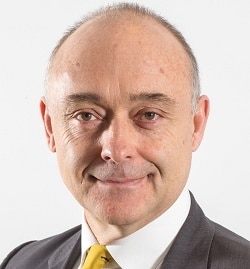
Langdon: essential service
The Bar Council has appointed Thrings and Veale Wasbrough Vizards as the first members of a new panel that will help barristers “delicately” recover unpaid fees from solicitors.
More firms are expected to join the panel, and they offer a choice of payment options, including conditional fee agreements and fixed fees.
Some will also offer discounts or additional services to those barristers who pay the Bar Council’s Bar representation fee. Other firms can still offer this work without being on the panel.
Bar chairman Andrew Langdon QC said: “The debt recovery panel will be an essential service for many barristers. As most of us are self-employed, income is essential to our livelihoods. Balanced against that is the need to maintain long-term commercial relationships with our professional clients.
“With that in mind, the law firms on the panel are adept at handling the sensitivities around debt recovery and are able to handle the recovery of fees owed to barristers delicately. We want barristers to know they can turn to this service with the confidence that their case will be handled with care.”
In 2015, the Bar Council closed its fees collection service following the introduction of the standard contractual terms in January 2013, the introduction of which was to avoid instructions being taken on non-contractual terms.
The Bar Council will have no involvement in cases and its role is limited to promoting the availability of the panel. Being on the panel is not an endorsement; “rather it affirms that [the firms] have made a commitment to understanding the needs of the practitioner and the business of chambers”.