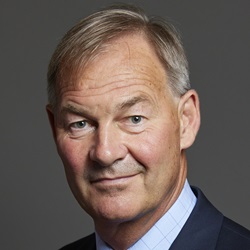
Lowe: Bar Council scheme is vile
The Bar Council has hit out at the “negative and, in some cases, disgraceful social media posts” responding to its launch of this year’s 10,000 Black Interns at the Bar programme.
The spark was comments by MP Rupert Lowe, formerly of Reform, who described the scheme as “anti-white racism”.
Working with the wider 10,000 Black Interns Foundation, it offers university students and graduates six-week internships at several chambers and other organisations.
To be eligible, applicants must be Black or of Black heritage (including mixed heritage) and studying at a UK university, or have graduated within the last three years.
In a letter to the Bar Council that he published on social media, Mr Lowe wrote: “This is racism. What message does this send to a generation of talented, hardworking young people who happen to be white – that their ambitions are less worthy? That they must be excluded to balance some imagined historical scale? It’s vile. The scheme is vile.
“Your approach is divisive, unjust, and in my view entirely incompatible with the principle of equality before the law that the Bar is meant to uphold. Quite frankly – what are you playing at? You should be ashamed of yourselves.
“I will be monitoring this closely, and I will continue to raise this issue publicly and in Parliament. I hope you will urgently reconsider your approach.”
In a later response to a Bar Council post on X promoting the scheme, Mr Lowe said: “Why is this racist filth still up?”
It is not clear if the MP realised that it forms part of a much wider initiative, which started in 2020 in the investment management sector as 100 Black Interns before its ambitions grew.
In a statement, the Bar Council acknowledged that launch of the scheme had “sparked a backlash on social media and prompted questions from individuals over the legality of the scheme”.
It pointed out that 10,000 Black Interns has been running since 2022 and was “lawful positive action under sections 158 and 159 of the Equality Act based on evidence of under-representation in relation to access to the profession”.
It was one of many schemes across the Bar to provide mentoring, work experience and other support to aspiring barristers from under-represented groups.
“Since the negative and, in some cases, disgraceful social media posts, we’ve been heartened by the many messages of support we’ve received from barristers, host chambers and the Inns – all of whom are pleased to be involved with outreach programmes and recognise the importance of equality and diversity at the Bar,” it went on.
“We’re proud of the work we do on improving equality, diversity and inclusion at the Bar and we are committed to continuing to run and promote our excellent programmes, including 10KBI.
“Across the Bar, career programmes and support are designed to ensure people from all backgrounds have the opportunity to learn about the profession and understand what’s involved in qualifying as a barrister.”
In an open reply to Mr Lowe’s letter, barrister Simon Anderson at Park Square Chambers in Leeds, wrote on LinkedIn that the initiative was “a targeted attempt to redress a longstanding imbalance and to ensure that the Bar reflects the society it serves”.
He continued: “For generations, informal networks, structural barriers, and entrenched privilege have advantaged one group disproportionately. If equality of opportunity is truly the principle we wish to uphold, then we must acknowledge that some communities begin from a position of systemic disadvantage.
“Schemes such as this are not about lowering standards, they are about broadening access. They help ensure that a talented young person’s prospects are not limited simply because they lack the connections, financial backing, or inherited advantages that others take for granted.”
Far from being “vile”, Mr Anderson argued, the scheme was actually “a principled and necessary step towards building a Bar that is more inclusive, representative, and fair”.
He said true equality was not treating unequal situations as though they were equal: “It is taking positive, thoughtful steps to dismantle barriers that have excluded people for far too long. That is what this scheme seeks to do.”
Mr Anderson’s post has attracted more than 100 responses, several agreeing with Mr Lowe.