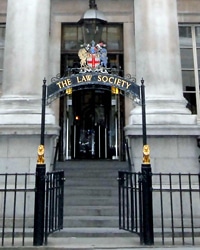
Law Society: Some details not provided clearly to ASA
All of the 3,000 law firms accredited under the Law Society’s Conveyancing Quality Scheme (CQS) need to ensure they are not using in their own marketing the society’s description of the scheme that was yesterday ruled to be misleading, it has emerged.
An internet search threw up multiple results of law firms using the society’s claim that, to gain accreditation, they have to go through “rigorous examination and testing to demonstrate that they have a high level of knowledge, skills, experience and practice”.
The Advertising Standards Authority (ASA) said that this was an exaggeration, given the checks that a firm has to undergo to receive the Law Society’s approval.
An ASA spokesman confirmed to Legal Futures: “Our ruling applies to any business that is making the same or similar claims. We’d expect firms to bring their claims in line with our findings. However, should concerns arise, we’d judge a case on its merits.”
A Law Society spokesman said it had emailed all CQS members to inform them of the ruling and the need to change their marketing if they repeated the claim.
He added that the society was also reviewing its marketing for other schemes – its family law accreditation scheme, for example, uses almost exactly the same wording, saying: “Members will have shown that they have and will maintain a high level of knowledge, skills, experience and practice in the area of family law.”
The ASA spokesman also explained why it had reversed the original decision to dismiss the complaint, saying: “Our decision changed because we were able to assess in further detail aspects of the accreditation process from the Law Society that had not been provided very clearly during our initial investigation.
“Taking that into account, ASA council was persuaded that it should overturn its original decision.”