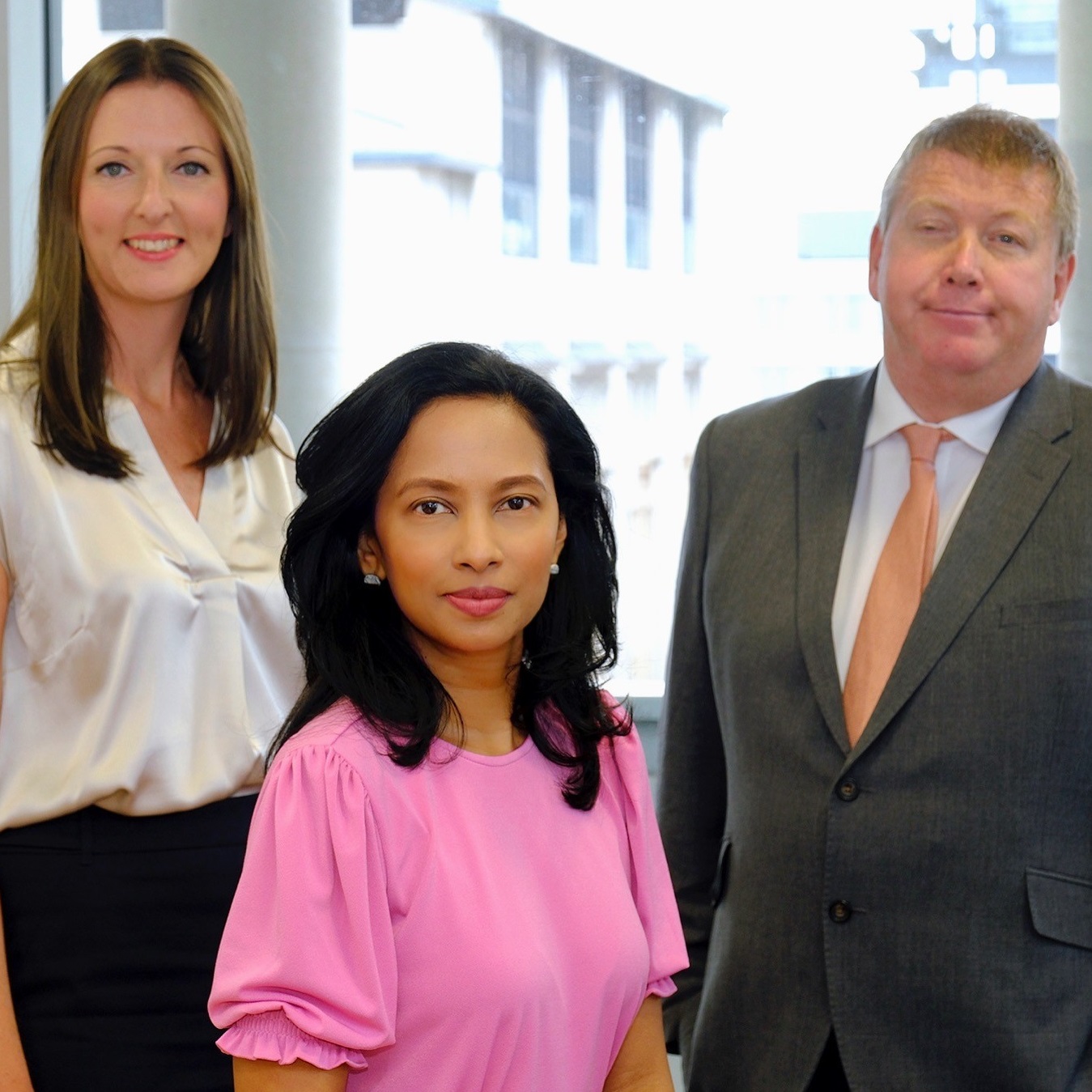
Gateley (l-r): Alicia Theuma, Chaya Hanoomanjee, Richard Healey
Listed law firm Gateley has increased its non-legal professional capabilities by spending £6m on an East Midlands chartered surveyors practice.
RJA Consultants employs around 50 staff in Nottingham and Leicester and in its last financial year generated revenue of nearly £4m, with a corporatised profit before tax of £800,000.
It is Gateley’s 14th acquisition since becoming the first law firm to list in London, back in 2015, 11 of which have been non-legal businesses.
RJA specialises in providing quantity surveying and project management services to organisations that deliver affordable housing, which Gateley described as “a resilient sector which is underpinned by high levels of grants to support delivery of the government’s housing targets”.
The law firm told investors that RJA “complements the existing market leading expertise within Gateley Legal’s residential development and construction teams”, and its focus on affordable housing “adds further resilience” to the group’s property ‘platform’.
Founder and managing director Richard Julian and four other directors will continue to work as part of the RJA management team.
Gateley is paying an initial £3.9m, paid in cash and shares, with the rest paid over the next two years subject to RJA meeting revenue targets.
Last year, fellow chartered surveyors Smithers Purslow became Gateley’s biggest acquisition since listing, costing £20m.
In 2021, it bought Tozer Gallagher, a firm of chartered quantity surveyors and construction consultants, to add to Gateley Vinden, its property and construction consultancy acquired a year earlier.
Gateley chief executive Rod Waldie said there were “common threads” between RJA and Gateley Smithers Purslow and across the property platform, “bringing opportunities to increase market share, as well as target new markets and workstreams”.
“RJA has a strong track record of growth, excellent relationships with clients, a dedicated and positive culture and an ambitious management team, qualities which closely match Gateley’s business and culture.”
Meanwhile, Gateley has hired Chaya Hanoomanjee and Alicia Theuma, former head of collective actions and principal lawyer respectively at Slater & Gordon, to launch a collective actions practice.
Richard Healey, partner and head of Gateley’s business services platform, described the new practice as “a natural move for us”.
“We… can see a gap in the market for a collective actions practice that puts clients first and combines the best legal and commercial expertise in this area,” he said.
Ms Hanoomanjee said success in collective actions required investment in sophisticated technology and “the ability to work through complex cost and funding mechanisms” in addition to litigation expertise.
“Gateley’s new practice will be unique in combining all these elements to achieve meaningful outcomes for diverse groups of clients. We have the appetite to pursue the most challenging cases if we believe there has been injustice.”
In its most recent trading update, Gateley said revenue for the year to 30 April 2023 was expected to be not less than £161m, a 17% increase on the previous year, with underlying adjusted profit before tax expected to be in line with market expectations.
For no obvious reason, Gateley’s share price has been falling steadily over the past two years, from an all-time high of 258pin September 2021. It closed on 155p last week.