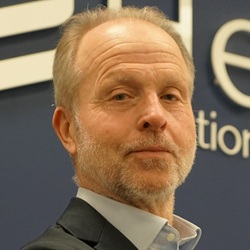
Waters: Barbarian at the gate
Artificial intelligence (AI) will create a “huge dividing line” between innovative and conservative law firms, the founder of a Sussex litigation practice has predicted.
Jonathan Waters, director of Helix Law in Brighton, also said the combination of technology and litigation support services had “closed the gap that used to exist” between City law firms and smaller, specialist litigation firms.
“City firms know this is coming. The barbarians are at the gate,” he claimed.
Helix Law uses AI for many tasks, including document management, client communication and time recording – which Mr Waters said has boosted its average fees earned per employee.
“As AI takes care of menial, time-consuming tasks, we’re moving closer to a world where all firms can bill based on value and efficienc.”
Mr Waters described law as a conservative profession, which had been “optimised for people who liked to read and be careful”.
However, “when it comes to the operational side of the business, we have to have a different mindset and embrace technology and do things that have not been done before”.
AI would “create a huge dividing line” between small, innovative firms who used it to “rapidly accelerate, and more traditional firms who choose to remain set in their approach”.
He went on: “We can do everything a City firm does because technology and support services have closed the gap that used to exist.”
Mr Waters said he did not rule out private equity investment in Helix, if “our values were aligned and we needed capital to grow”, but the biggest constraint on his firm was not lack of capital but the preference of in-house counsel for City firms.
In-house lawyers “never get the sack for appointing a City law firm” but were reluctant to choose “disruptor brands”.
Mr Waters founded Helix in 2011, and it now has 20 staff including 16 lawyers. He co-owns the firm with fellow director and barrister-turned-solicitor Alex Cook. The firm became one of the first outside the City to partner with Harvey AI in 2023.
Mr Waters said using AI could make lawyers “faster and more consistent” and it could “spot points that humans would miss”.
Its “greatest weakness” was that, unlike the contestants on Mastermind, “it never says ‘pass’”.
He gave the example of opposing lawyers who quoted two passages from cases which “entirely undermined” his case. He checked the rulings, both of which were genuine, but the quotes “simply did not exist”. The opponents denied that the mistake was due to using AI.
However, AI could also be used to quickly find real passages in real judgments.
It could also be used by clients who “do not like your advice and ask AI to quarrel with it”. This meant that lawyers had to “unpick” the results, which ended up as a cost to the business.
However, AI was a “net benefit” to the legal world” and the combination of human lawyers and AI was “greater than either of them on their own”.
Mr Waters said a specialist litigation firm like Helix, which did not feel “entitled to the work”, was “more than willing” to “back advice with our money” and only get paid if clients were too.
He said litigation firm and client could work together, with their “fates intertwined”, like the double helix which gave the firm its name.
Last month, the chief executive of Stafford-based ORJ Solicitors predicted that AI would “revolutionise” [1] the way very large litigation cases are handled by allowing smaller firms to do the work.