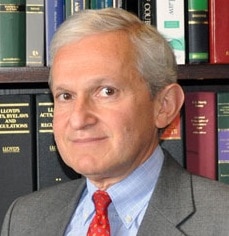
Vos: County courts will still be busy whatever happens
Access to justice is “improving” and people are “surprised when they use the new systems which we’ve put in place” how accessible and easy to use they are, the Master of the Rolls has told peers.
Sir Geoffrey Vos said digital systems were “much quicker than the old, paper-based systems” but “not extensive enough”.
“We need to continue the process of getting paper out of the county court and moving more case types to digital platforms,” he said.
Sir Geoffrey said it was “massively difficult” to do the former because of the “multifarious” cases, and the fact that every court was different. For example, there were “lots of airport delay claims” at Luton County Court and many personal injury claims in Birkenhead.
Unlike the family courts and tribunal system, a “one size fits all” system would not work for the county courts, where so many cases had “different and archaic rules and fees”.
Addressing peers on the House of Lords constitution committee on the rule of law, Sir Geoffrey said one of the main problems were delays in South-East England caused by a lack of district judges.
He said delays were “being addressed” despite the funding issues the courts faced and “we are not in a position similar to delays in some other countries”. Digitisation would make justice quicker but there would always be paper alternatives.
However, he warned that even if “millions of claims” were resolved without people going to court, there would still be “quite a few” that did not settle, and he expected the county courts to be “as busy as ever” in the future.
“There will be always be hard nuts to crack. There are some cases where you just need to see a judge to get the case resolved.”
Responding to a question from former justice minister Lord Bellamy on whether a system of online triage for civil justice cases could be created as a national service, Sir Geoffrey said it was “not feasible for the government to fund a universal point of entry” to the system.
The Online Civil Procedure Rules Committee, which he chairs, was creating a “framework” to ensure that public and private online dispute resolution platforms were connected, and people did not “fall through the cracks in the system”. This would be “transformational”.
Sir Geoffrey said the civil justice system was doing “really well on mediation”. Compulsory referral of small claims cases for telephone mediation by HM Court & Tribunal Service was achieving a success rate of around 38%, which meant many more cases were being settled than when the system was voluntary, though this had a higher success rate of 50%.
Meanwhile, his ruling in the 2023 Churchill v Merthyr Tydfil case, which made it clear that courts have the power to stay proceedings and order mediation, had been “picked up in a way that none of us expected”, and courts were making Churchill orders all over the country.
However, Sir Geoffrey went on: “We have to be extremely careful that people do not forego their legal rights because of pressure to go to mediation.”
He said this “often happened” in family law cases, when one party was “not properly advised” and as a result the solution were “not fair”.
He disagreed with Lord Bellamy that that enforcement of civil justice could be described as the “poor relation of the poor relation”.
Sir Geoffrey responded: “I don’t think that is fair, but it is in the ‘too difficult’ box.”
Reform of enforcement would need legislation, investment and people, “all of which were in short supply”.