Winn: Possible five-year earn-out
Private-equity backed personal injury business Winn Group has reported soaring revenue and profit amid talk that it is to be sold for £350m.
Bucking the wider trends in the claimant market, the group saw a 27% increase in revenue to £190m in the year to 31 March and 41% jump in gross profit to £54m.
EBITDA before exceptional costs rose by even more, 51%, to £37m as staff numbers also grew rapidly, from 531 to 671.
The Newcastle-based group is an accident management company that provides a one-stop shop of services.
These are made up of insurance-related products, vehicle hire and repair, recovery and storage, as well as personal injury advice, although the latter now accounts for only a small percentage of turnover.
The group’s brands are Winn Solicitors, Winn National Accident Specialists, Winn Legal, On Medical, On Hire, On Insurance and Onhealth.
Souter Investments – the private investment vehicle of transport entrepreneur Sir Brian Souter – has a 43% stake in the business to founder Jeff Winn’s 44%. According to a profile of Mr Winn yesterday in The Sunday Times, Mr Souter is thinking of selling.
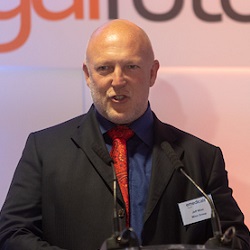
It quoted Mr Winn saying: “The advice we’ve had from KPMG is that the chances are a private equity company will come in to invest, buying out Souter’s shares and some of mine, and I’d roll for another five years. Which I’m prepared to do for the right sort of terms.”
In announcing the results earlier this month, Mr Winn – now the group’s executive chairman – said the business now had an estimated valuation of £350m, and this was the potential sale price cited by the newspaper.
The Winn Group can process claims from any part of the UK without the involvement of external third-party companies – it has a 24/7 first notification of loss (FNOL) service, instead of using the GTA – the General Terms of Agreement, a voluntary agreement on credit hire service standards and costs – it has put in place bespoke protocols with 60% insurers so as to enable rapid payment.
The FNOL team handled around 10,000 calls a month and the business arranged more than 20,000 hire cars – road traffic accident volumes and hire instructions increased by 12% and 26% respectively over the year.
Chief executive Chris Birkett said: “The group is in a strong financial position and well placed to take advantage of business opportunities if the strategic fit is right. We are also looking at extend our services for insurer clients to include the management of fault incidents, which we feel could come under Consumer Duty requirements.
“We are also actively participating in several significant tenders for sizeable accounts and we believe with our robust capabilities and proven track record we are positioned favourably to secure these opportunities.
The Sunday Times profile said Mr Winn, 58, lives with his fiancée and seven-month-old baby in a “lavish, stone-built manor nearby with ‘105 or 110’ rooms (he’s not entirely sure)” that has “two full-sized cocktail bars, a snooker room with two 12ft tables, and a cinema that could comfortably seat a couple of dozen movie lovers”.
The figures in the 2023-24 results are actually significantly lower compared to last year’s. The group said that it has “reassessed the fair value of the revenue where the receipt is to be at non-protocol terms and decided to report it either at recoverable amount, when it is known, or at its estimated recoverable value, when unknown”.
The decision reduced the turnover figure for 2024 from what would have been £291m to £190m. The 2022-23 reported revenue was £235m but this has been adjusted to £150m.