Doing your duty


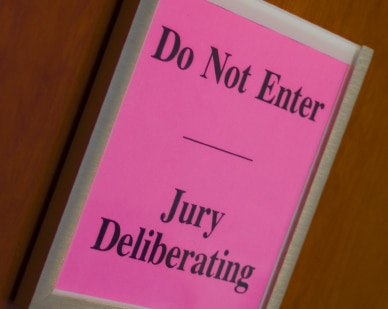
Jury: should you instruct a barrister you don't want to look better in court?

Q. I am acting for a client who has been charged with rape. I was proposing to instruct our usual barrister, a man with a great deal of experience. However, the client is insisting that we instruct a woman since he thinks that will play better with the jury. Am I obliged to accept this instruction?

A. As a general rule, you must comply with your client’s instructions unless to do so would involve you in a breach of the law or a breach of the rules of professional conduct (see rule 2.01 of the Solicitors’ Code of Conduct 2007).

If you refer to rule 6.01 of the code, you will see that you must not, in your professional dealings with others (which includes other lawyers), discriminate against them on various grounds, which includes discrimination on the grounds of their sex. You should explain to your client why you cannot comply with this instruction, but if he refuses to change it, you will have to cease acting.  See rule 6, guidance notes 15 & 16.


Leave a Comment

By clicking Submit you consent to Legal Futures storing your personal data and confirm you have read our Privacy Policy and section 5 of our Terms & Conditions which deals with user-generated content. All comments will be moderated before posting.

Required fields are marked *
Email address will not be published.

This site uses Akismet to reduce spam. Learn how your comment data is processed.

Blog


Client account interest is not spare change

The proposed Interest on Lawyers’ Client Accounts scheme is being framed as a sensible, international, “tried and tested” way for the profession to help fund a justice system under strain.


The formula for finance-enabled business development

Client concentration or over-dependence now counts as a top strategic risk for 26% of firms. Cross-selling is an antidote – a way to bolster revenue resilience without relying on client acquisition.


Whistleblowing guidance for in-house lawyers – a call to arms

In-house lawyers are in a unique position to spot wrongdoing. But reporting it is not just potentially dangerous from a personal point of view.


Loading animation