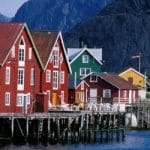
What can we learn from Norway?
Norway, a country of five million people, was ranked ninth in the ‘Ease of Doing Business 2014’ survey, one ahead of the UK. However when matched to the registering property index, Norway is ranked 10th, while the UK sits at a lowly 68th. Late last year, our government sent a fact-finding group to Norway to learn about how the Norwegians have run their central government mapping, land registry and water information as a combined function successfully for the past 18 years. It may provide some valuable lessons.

A deluge of due diligence?
It’s been a winter like no other… or has it? Perhaps this time it’s just rain and wind, not snow and ice. Is this simply what nature throws at us on our rocky outcrop in the North Atlantic? What’s certain is that weather patterns have become extreme over the last 15 or so years, prompting climate scientists to rewrite models predicting more severe weather bringing more moisture and therefore more flooding. But what does this mean for home buyers and the conveyancers acting for them?

We’re all in this together
There is a lot of web chatter about the value of brands in legal services and there are ongoing attempts to build national legal brands, so it is clear that there is fairly widespread acceptance that there is some ‘brand value’ in law. But the best way to exploit your brand is to stay local and work with other local brands.

You’ve got a McKenzie Friend in me
Two events in London last week were connected by the withdrawal of civil legal aid and its consequences for the justice system. One was a major report on technological alternatives to legally aided services, and the other was a Legal Services Consumer Panel roundtable discussion on fee-charging McKenzie Friends.

Time not to turn back the clock
In a guest blog, Chris Kenny, the chief executive of the Legal Services Board, outlines the need for further simplification and liberalisation to encourage greater competition and innovation in the legal market, and says that the notion of going back to self-regulation will return the law to its bad old days.