


Posted by Daniel Brito, managing director of Legal Futures Associate National Claims
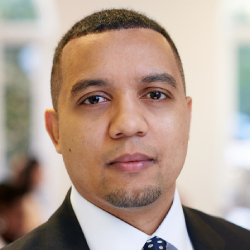
Brito: Lawyers need to understand how AI can help them
Medical negligence claims often turn on two pivotal legal questions: breach of duty and causation. As artificial intelligence (AI) becomes more embedded in healthcare and legal practice, can it help in identifying them more clearly, efficiently or fairly?
At National Claims, we believe that, while AI holds promise, its role must be carefully understood, especially in the sensitive and high-stakes area of medical negligence claims. Below we explore the opportunities, the challenges and how AI might shape the future of claims, particularly in the NHS.
How AI is already being used in healthcare
AI is already embedded in several NHS services:
- Diagnostics: AI supports radiology and cardiology by detecting abnormalities in scans more quickly.
- Triage and monitoring: Systems can flag high-risk patients and predict deterioration.
- Administration: Algorithms streamline patient record management and resource allocation.
These applications show AI’s potential both to reduce medical errors and generate data that may later support medical negligence claims.
Identifying breach
AI offers several ways to assist in establishing breach in medical negligence claims:
- Benchmarking care standards: AI trained on large datasets can help define what competent care looks like in specific clinical situations.
- Spotting deviations: Algorithms can flag when actions fell well outside expected norms, highlighting possible breaches.
- Hindsight analysis: Patient records and test results can be re-analysed to reveal whether signs were overlooked.
- Prevention and auditing: AI can also help NHS trusts monitor patterns of near misses, reducing future errors.
Assisting with causation
Causation is often the most contested element of claims. AI could help by:
- Risk modelling: Estimating how much a delay or error increased the likelihood of harm.
- Simulations: Creating ‘what if’ scenarios to show how treatment might have changed an outcome.
- Ruling out alternatives: Comparing cases to determine if the injury is likely with or without negligence.
The challenges ahead
Despite its promise, AI raises concerns:
- Transparency: Many AI systems function as ‘black boxes’, making their reasoning hard to scrutinise in court.
- Liability: Responsibility for AI errors is unclear: does it fall on the clinician, hospital or developer?
- Proof standards: Courts still require breach and causation to be shown on the balance of probabilities. Risk alone may not be enough.
- Bias in data: If training data is flawed or incomplete, AI may give misleading results.
- Legal precedent: Courts continue to rely on established tests like Bolam and Bolitho, so AI must fit within those frameworks.
Where AI could transform claims
Although challenges remain, AI has clear potential to support both claimants and practitioners. Its benefits can be seen in several practical areas:
Faster identification of diagnostic errors: AI systems can analyse scans and records with speed and accuracy, flagging misdiagnoses or harmful delays. For claimants, this means stronger evidence of breach and the ability to move cases forward more quickly.
Retrospective analysis of complex cases: In unusual circumstances – for example, facial paralysis following dental anaesthesia – AI can draw comparisons across thousands of previous cases. This helps to establish whether accepted practice was followed and whether any departure contributed to the injury.
Uncovering systemic issues across NHS trusts: By reviewing data on a wider scale, AI can detect patterns such as recurring anaesthesia complications, clusters of surgical mistakes or repeated infection problems. Evidence of these systemic failings can strengthen individual claims while also pointing to wider improvements in patient safety.
Supporting expert testimony: Expert witnesses remain crucial in proving causation but AI can enhance their evidence. Simulations, probability models and clear visual aids help simplify complex findings, making arguments more persuasive in court.
Improving risk management: Finally, AI may help NHS trusts and insurers identify risks before they escalate into claims. This proactive use can reduce the incidence of negligence while also making the claims process more efficient when issues do arise.
Bringing it home: Facial paralysis after dental anaesthesia
To illustrate how breach and causation work in practice and where AI could help, consider the example of facial paralysis after dental anaesthesia.
Patients may suffer long-term nerve damage after a routine procedure. AI could analyse past cases of nerve injury during anaesthesia to establish norms, assess risks, and reconstruct what likely happened. This could strengthen both breach and causation arguments in medical error claims UK.
What needs to happen next
For AI to play a meaningful role in medical negligence claims, several steps are needed:
- Better datasets: Training data must be diverse, transparent and representative.
- Validation: AI tools need rigorous peer review and clinical testing.
- Legal clarity: Clearer rules are required around liability for AI use.
- Oversight: Regulators must ensure tools are safe and ethical.
- Training: Clinicians and lawyers must understand AI’s strengths and limits.
- Court readiness: Judges and experts must be prepared to interpret AI evidence critically.
Key takeaways for legal professionals
AI is unlikely to replace expert testimony, but it will increasingly shape how medical negligence claims are argued. For legal professionals, the priority is to understand how AI evidence can support or challenge breach and causation, while ensuring it fits within established legal tests.
We view AI as a tool to strengthen case preparation and expert analysis, whether the matter involves delayed diagnosis or surgical error. For lawyers advising on NHS claims, the task is to deploy AI strategically and critically, keeping justice at the centre.








